Stainless Steel Channels
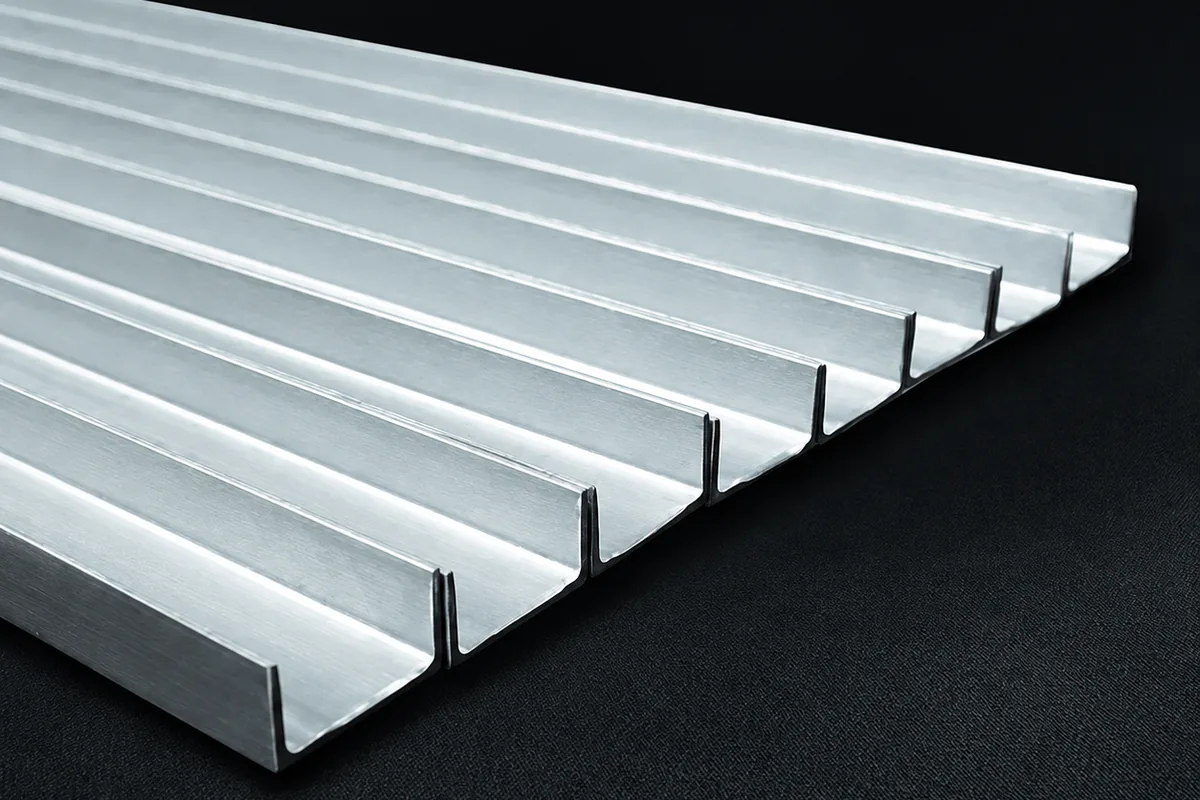
Hot rolled, annealed and pickled stainless steel channel, taper and parallel flange, in lengths up to 6.4 metres
Product Description
Stainless steel channel is a hot rolled section of a web and two flanges, made in taper flange and parallel flange forms. Laxcon Steels rolls it from 50 × 25 mm to 101.6 × 50.8 mm, hot rolled, annealed and pickled, in lengths up to 6.4 metres.
As a leading stainless steel channels manufacturer in India, we manufacture & offer both types, Parallel (Non-Taper) as well as Non-Parallel (Taper) SS channels in different sizes (both imperial & metric) and stainless steel grades. All the channels are hot rolled for their high strength. As a trusted manufacturer and supplier, we also offer cut to size options to meet your specific requirements. For custom requirements apart from the standard size, please contact us.
Weight per metre for every channel section, tapered and parallel, is in the size table on this page and worked out in the stainless steel channel guide.
Channel Specifications
- Size range
- 50 × 25 mm to 101.6 × 50.8 mm, taper and parallel flange
- Length
- Up to 6.4 metres
- Supply condition
- Hot rolled, Annealed & Pickled (HRAP)
- Tolerance
- EN 10279
- Bar ends
- Deburred ends or plain ends
- Marking
- Inkjet printed with grade and size
- Weight per metre
- Size table on this page
- Production
- Made to order in every grade listed on this page
- Certifications
- DNV Approval of Manufacturer, CE Marking
Available Sizes
Size Range
| Depth × flange × web × flange thickness (mm) | kg per metre | Section (in) |
|---|---|---|
| Taper flange | ||
| 50 × 25 × 3 × 3.3 | 2.33 | |
| 50 × 25 × 5 × 6 | 3.87 | |
| 50 × 38 × 5 × 7 | 5.62 | |
| 65 × 42 × 5.5 × 7.5 | 7.15 | |
| 100 × 50 × 6 × 8.5 | 10.65 | |
| 101.6 × 40.23 × 4.76 × 7.52 | 8.03 | 4" × 1-3/5" × 3/16" × 2/7" |
| Parallel flange | ||
| 50 × 25 × 5 × 5 | 3.56 | |
| 75 × 40 × 5 × 5 | 5.73 | |
| 75 × 40 × 6 × 6 | 6.78 | |
| 80 × 40 × 5 × 5 | 5.93 | |
| 80 × 40 × 6 × 6 | 7.02 | |
| 100 × 50 × 5 × 5 | 7.51 | |
| 100 × 50 × 6 × 6 | 8.91 | |
| 101.6 × 44.45 × 6.35 × 6.35 | 8.92 | 4" × 1-3/4" × 1/4" |
| 101.6 × 50.8 × 6.35 × 6.35 | 9.56 | 4" × 2" × 1/4" |
Channel Grades
Austenitic
Channel Reference
Governing standards
- EN 10088-3
- Stainless steels: technical delivery conditions for semi-finished products, bars, rods, wire, sections and bright products for general purposes. Composition, heat treatment condition and mechanical properties per grade.
- EN 10279
- Hot rolled steel channels: tolerances on shape, dimension and mass.
- ASTM A276/A276M
- Stainless steel bars and shapes: composition, condition, mechanical properties and finish designations for hot-finished and cold-finished bar.
- ASTM A484/A484M
- General requirements for stainless steel bars, billets and forgings: permissible variations in dimensions, straightness, weight and length, and the test and marking requirements every bar order inherits.
- EN 10204
- Metallic products, types of inspection documents: the 2.2 test report and the 3.1 and 3.2 inspection certificates a purchase order can call for.
Taper flange and parallel flange
A taper flange channel has flanges that thin from the web to the toe, at a slope of about 8 percent, and is the traditional rolled section; a parallel flange channel has flanges of constant thickness, which simplifies bolting through the flange and the fit of a cleat. The size table lists both, from 50 x 25 mm to 101.6 x 50.8 mm (4 x 2 inch), with the web and flange thicknesses that are rolled. Both are supplied hot rolled, annealed and pickled, to EN 10279 tolerances on shape, dimension and mass.
Weight per metre for each published section, and the difference between a C channel and a U channel, are set out in the stainless steel channel guide.
Channel against angle
A channel is a beam: the web carries the shear and the two flanges the bending, so it is the section for a rail, a sill, a stair stringer or a support that spans between fixings. An angle is a stiffener and a connector: it carries less bending for its weight but fixes to a face on either leg. Where a frame needs a member that both spans and bolts, the channel takes the span and angles make the connections. Both sections come from the same section mill, in the same grades, to the same HRAP condition.
Frequently Asked Questions
Which stainless steel C channel and U channel sizes does Laxcon make?
Laxcon rolls stainless steel channel sections, the profile also sold as C channel or U channel, from 50 x 25 mm through 101.6 x 50.8 mm in tapered and non-tapered form, with the web and flange thickness for each section in the size table above.
How are Laxcon stainless steel channels supplied?
Stainless steel channels are supplied in HRAP condition in lengths up to 6.4 metres, to EN 10279 tolerances, with deburred or plain ends.
How is channel material identified before dispatch?
Stainless steel channel bundles can be inkjet marked and the grade can be confirmed by handheld PMI testing. The dispatch mark identifies the heat number, grade, size and bundle weight.
How can stainless steel channels be packed and traced?
Laxcon packs stainless steel channels in standard bundles of 500 to 1,000 kg with HDPE or LDPE wrapping and two lifting slings. ISPM 15 wooden boxes and fibre-tube packing are available, and every bundle is marked with heat number, grade, size, and net and gross weight.
What is the price of stainless steel channels per kg?
Stainless steel channel is priced per kilogram, and the price depends on the grade, the section size, the flange form, the length and the quantity ordered. Laxcon Steels quotes each order on request; what moves the price of stainless steel in general is set out in the stainless steel price article.
What is the weight of a 100 × 50 stainless steel channel per metre?
A 100 × 50 × 5 mm parallel channel weighs 7.51 kg per metre and a 100 × 50 × 6 mm parallel channel 8.91 kg per metre at 7.90 g/cm³. The tapered 100 × 50 × 6 × 8.5 mm channel weighs 10.65 kg per metre, because its flanges are 8.5 mm thick at the root.
How long are stainless steel channels?
Stainless steel channels are supplied in lengths up to 6.4 metres, about 21 feet, and cut to size on request. A 6.4 metre length of 75 × 40 × 5 mm parallel channel weighs 36.7 kg.
Which grades are stainless steel channels made in?
Channels are rolled to order in the grades listed above, with a separate page for AISI 304 channel. The channel guide sets out where 304, 304L, 316, 316L and lean duplex are each specified.
More questions
What are the standard sizes of stainless steel channels?
Tapered channels are rolled at 50 × 25 × 3 × 3.3, 50 × 25 × 5 × 6, 50 × 38 × 5 × 7, 65 × 42 × 5.5 × 7.5, 100 × 50 × 6 × 8.5 and 101.6 × 40.23 × 4.76 × 7.52 mm. Parallel channels are rolled at 50 × 25 × 5, 75 × 40 × 5 and 6, 80 × 40 × 5 and 6, 100 × 50 × 5 and 6, 101.6 × 44.45 × 6.35 and 101.6 × 50.8 × 6.35 mm.
Which stainless steel channel sizes are available in inches?
Three channel sections carry an inch size: 4" × 1-3/5" × 3/16" × 2/7" (tapered, 101.6 × 40.23 mm), 4" × 1-3/4" × 1/4" and 4" × 2" × 1/4" (parallel, 101.6 × 44.45 and 101.6 × 50.8 mm). Every other section is rolled to metric dimensions.
How is the weight of a stainless steel channel calculated?
The section is split into three rectangles, the web and two flanges, and the total area in mm² is multiplied by 0.0079 to give kilograms per metre at 7.90 g/cm³. A 304 channel runs about 0.4 percent heavier and a 316 channel about 1 percent heavier. The weight of every section is in the size table on this page and in the stainless steel channel guide.
How does Laxcon make stainless steel channels?
Laxcon melts stainless scrap in its own melting shop, casts the steel and hot rolls it into channel on its cross-country mills. The channel is annealed and pickled, then straightened on the section straightening machines listed on the technology page.
What are stainless steel channels used for?
A stainless steel channel is used as a beam: rails, sills, stair stringers, equipment frames, walkway and platform supports, tank and vessel stiffeners and machine guards.
What is the difference between a C channel and a U channel?
C channel and U channel are trade names for the same open section of a web and two flanges, and the stainless steel channel guide compares the tapered and parallel forms that do differ.
CATALOGUE
More
Products
 Bright Bars
 Precision Shaft Quality (PSQ) Bars
 Pipes and Tubes
 Hexagonal Bright Bars
 Square Bright Bars
 Cold-Drawn Flat Bars
 Forged & Proof Machined Bars
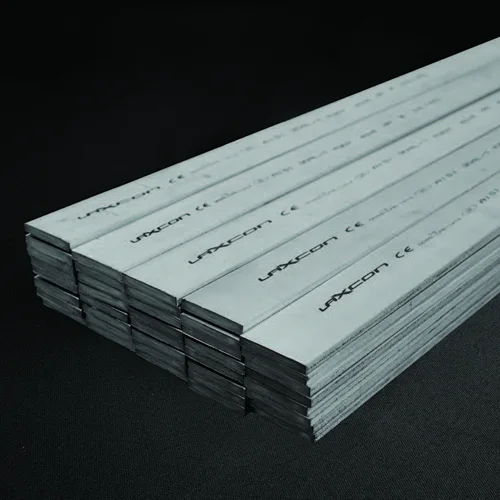 HRAP Flat Bars
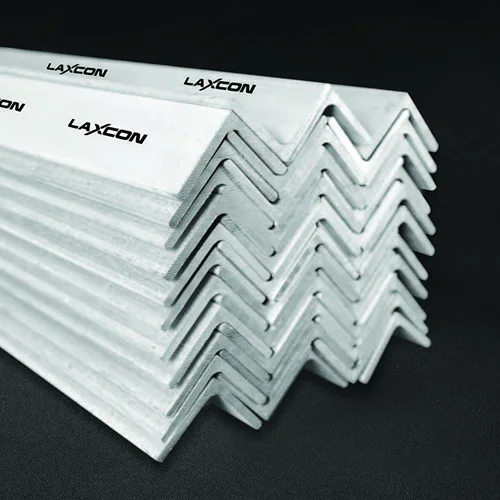 HRAP Equal Angles
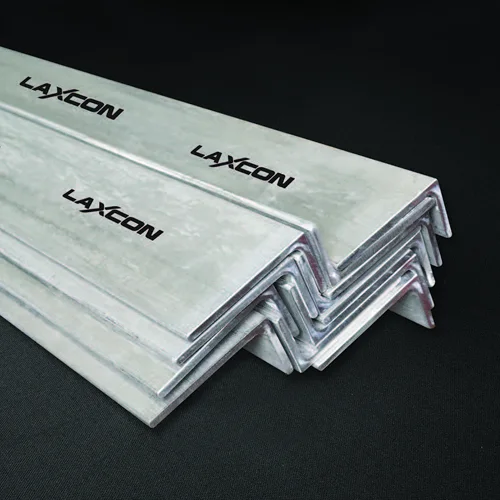 HRAP Unequal Angles
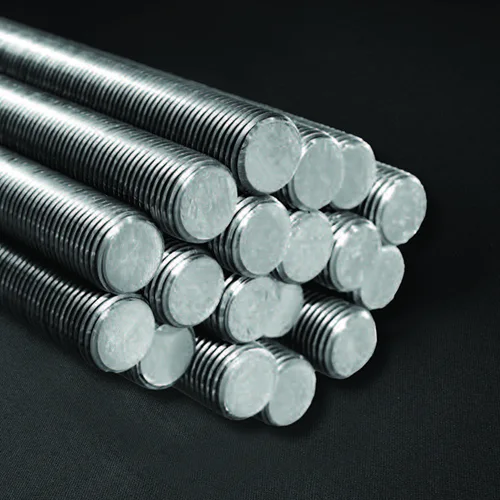 Threaded Bars
 Hot Rolled Round Cornered Squares (RCS) Bars
 Hot Rolled Round Bars
 Continuous Cast Billets / Blooms
 Forging Quality Ingots
 Precipitation Hardening Steels
 Duplex Steel
 T-Profile