EN 8 Bright Bars
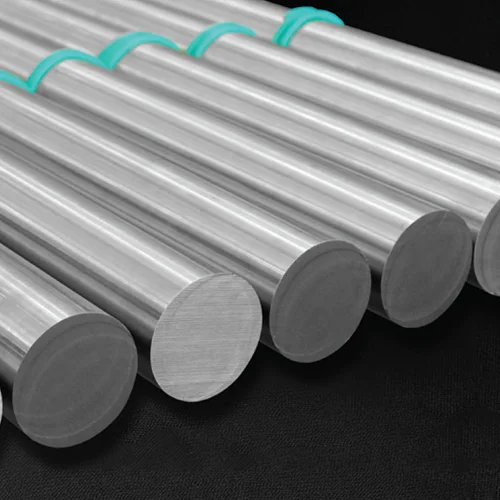
EN 8 bright bar is a medium-carbon engineering steel drawn or ground to size, used for shafts, spindles and pins.
BRIGHT BARS
EN 8 bright bar
EN 8 bright bar is a medium-carbon unalloyed engineering steel, designated 080M40 in BS 970, supplied as bright round bar under EN 10277. Carbon near 0.4 percent, with manganese as the main addition, is enough for the bar to harden and temper to a useful strength while it stays ductile enough to draw cold. It is taken over a low-carbon free-cutting steel such as EN 1A where the finished part carries load rather than only being cut quickly, and over EN 9, the next grade up in carbon, where the part has to be welded or bent. EN 19, a chromium and molybdenum alloy steel, is kept for sections too thick for EN 8 to harden through.
The bar is supplied as drawn, or normalised, or hardened and tempered to a condition of BS 970 before it is finished. Cold drawing raises the tensile strength by work hardening and leaves a straight bar with a bright surface. Centreless ground and smooth turned bars hold a closer diameter where the bar runs in a bush or a bearing. The steel cuts predictably but is not free-cutting, since no sulphur is added to break the chip. Welding is done with preheat and a temper afterwards, because the heat affected zone hardens at this carbon level. Laxcon Steels draws the bar to order from 5 to 115 mm for transmission shafts, spindles, pins and keys, studs and bolts, and lightly loaded gears.
Composition limits in weight percent are carbon 0.36 to 0.44, manganese 0.6 to 1.0, sulphur 0.06 maximum, phosphorus 0.06 maximum and silicon 0.05 to 0.35.
SPECIFICATION
EN 8 bright bar supply conditions
- Size range
- 5 mm - 115 mm (3/16" - 4-1/2")
- Length
- Up to 6.5 metres
- Cold Drawn
- Centreless Ground, Peeled & Polished, Rough Peeled or Smooth Turned Bars
- Tolerances
- h7, h8, h9, h10, h11, k12, k13
- Surface finish
- Ra 0.2-micron (8.7 RMS)
- Straightness
- Up to 0.5 mm per metre
- Grit polish
- K240,K320 or as per customer’s requirement
- Bars End Finish
- Chamfered ends, 30°,45°,60° and Plain Ends without Burrs or Sharp Edges
- Heat treatment
- Soft annealing or normalising; oil or water quenching and tempering
- Grade
- EN 8 (EN8, 080M40, C45, 1045)
- Family
- Carbon steel
- Supply
- Made to order in this grade; every published size of the form
Composition of EN 8
| Element | Symbol | Minimum % | Maximum % |
|---|---|---|---|
| Carbon | C | 0.36 | 0.44 |
| Manganese | Mn | 0.6 | 1.0 |
| Sulphur | S | 0.06 | |
| Phosphorus | P | 0.06 | |
| Silicon | Si | 0.05 | 0.35 |
Composition, weight percent, balance iron. From the Laxcon Steels grade reference.
Governing standards
- EN 10083-1
- Steels for quenching and tempering, part 1: general technical delivery conditions for the bars, rods and sections supplied for heat treatment.
- EN 10083-2
- Steels for quenching and tempering, part 2: technical delivery conditions for non-alloy steels, the C45 class the EN 8 designation maps to.
- EN 10277
- Bright steel products: technical delivery conditions for cold drawn, peeled, turned and ground carbon and alloy steel bars.
- BS 970-1
- Wrought steels for mechanical and allied engineering purposes, part 1: the British numbering behind the EN and M designations and the R to Z heat treatment conditions.
- ASTM A29/A29M
- Steel bars, carbon and alloy, hot-wrought: general requirements for delivery, the base every carbon and alloy bar order inherits.
- ASTM A108
- Steel bar, carbon and alloy, cold-finished: the specification for drawn, turned and ground carbon and alloy bars.
- EN 10278
- Dimensions and tolerances of bright steel products: the h and k tolerance classes for drawn, turned, peeled and ground bars.
- ISO 286-1 and 286-2
- The ISO code system for tolerances on linear sizes: the IT grades and the fundamental deviations behind h7, h9, h11, k12, k13, j6, f7 and f8.
- EN 10204
- Metallic products, types of inspection documents: the 2.2 test report and the 3.1 and 3.2 inspection certificates a purchase order can call for.
Tolerance by size, ISO 286
| Nominal diameter (mm) | h7 | h8 | h9 | h10 | h11 | k12 | k13 |
|---|---|---|---|---|---|---|---|
| over 3 to 6 | 0 / -0.012 | 0 / -0.018 | 0 / -0.030 | 0 / -0.048 | 0 / -0.075 | 0 / +0.120 | 0 / +0.180 |
| over 6 to 10 | 0 / -0.015 | 0 / -0.022 | 0 / -0.036 | 0 / -0.058 | 0 / -0.090 | 0 / +0.150 | 0 / +0.220 |
| over 10 to 18 | 0 / -0.018 | 0 / -0.027 | 0 / -0.043 | 0 / -0.070 | 0 / -0.110 | 0 / +0.180 | 0 / +0.270 |
| over 18 to 30 | 0 / -0.021 | 0 / -0.033 | 0 / -0.052 | 0 / -0.084 | 0 / -0.130 | 0 / +0.210 | 0 / +0.330 |
| over 30 to 50 | 0 / -0.025 | 0 / -0.039 | 0 / -0.062 | 0 / -0.100 | 0 / -0.160 | 0 / +0.250 | 0 / +0.390 |
| over 50 to 80 | 0 / -0.030 | 0 / -0.046 | 0 / -0.074 | 0 / -0.120 | 0 / -0.190 | 0 / +0.300 | 0 / +0.460 |
| over 80 to 120 | 0 / -0.035 | 0 / -0.054 | 0 / -0.087 | 0 / -0.140 | 0 / -0.220 | 0 / +0.350 | 0 / +0.540 |
Deviations in millimetres from the nominal size, ISO 286-1 and ISO 286-2. An h class permits no plus material and the full grade below nominal; the k12 and k13 classes of EN 10278, used for peeled and turned bars, permit the full grade above nominal and none below.
Weight per metre
| Diameter (mm) | kg per metre | Metres per tonne |
|---|---|---|
| 5 | 0.15 | 6,487.5 |
| 6 | 0.22 | 4,505.2 |
| 8 | 0.39 | 2,534.2 |
| 10 | 0.62 | 1,621.9 |
| 12 | 0.89 | 1,126.3 |
| 16 | 1.58 | 633.5 |
| 20 | 2.47 | 405.5 |
| 25 | 3.85 | 259.5 |
| 32 | 6.31 | 158.4 |
| 40 | 9.87 | 101.4 |
| 50 | 15.41 | 64.9 |
| 63 | 24.47 | 40.9 |
| 80 | 39.46 | 25.3 |
| 100 | 61.66 | 16.2 |
| 115 | 81.54 | 12.3 |
Density 7.85 g/cm³, diameter squared x 0.006166. Sizes are the published range at the nominal diameters shown.
Ordering EN 8 bright bar
An enquiry for this grade in this form names the grade and the governing standard, BS 970 for 080M40 or EN 10277 for the bright product, the delivery condition, the diameter with its tolerance class to EN 10278 or ASTM A484, the finish, the cut length within 6.5 metres, the quantity, the inspection document type to EN 10204, and any ultrasonic test, hardness check or PMI check required.
EN 8 in
other forms
CATALOGUE
More
Products
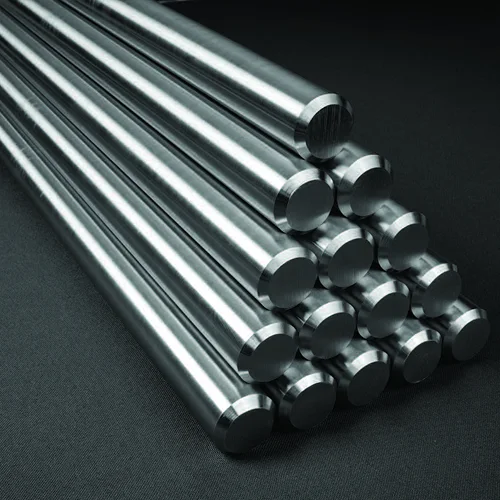 Precision Shaft Quality (PSQ) Bars
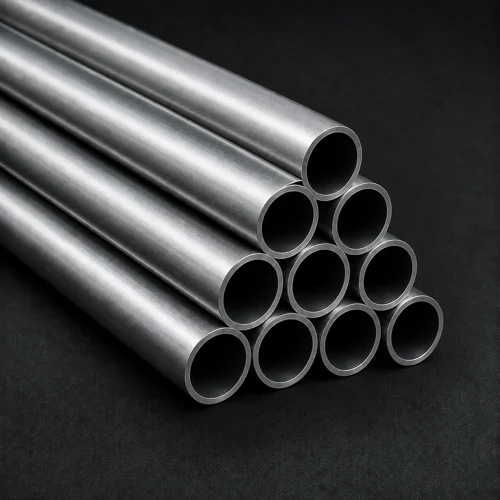 Pipes and Tubes
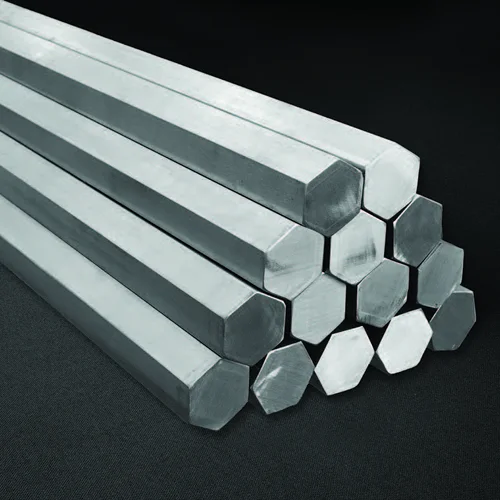 Hexagonal Bright Bars
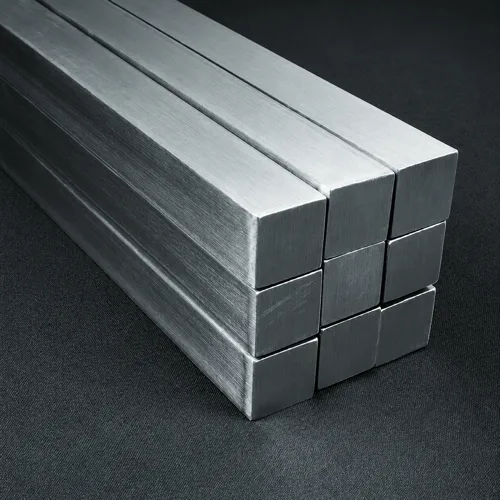 Square Bright Bars
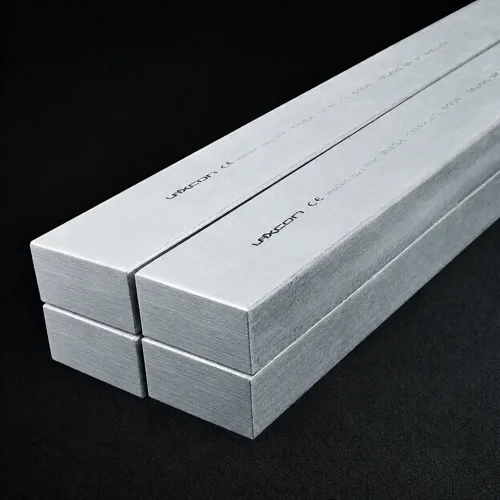 Cold-Drawn Flat Bars
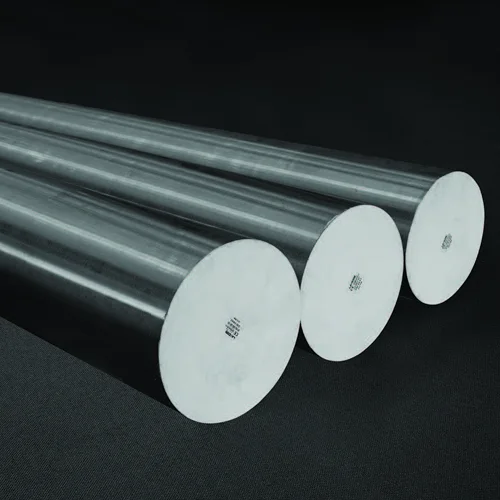 Forged & Proof Machined Bars
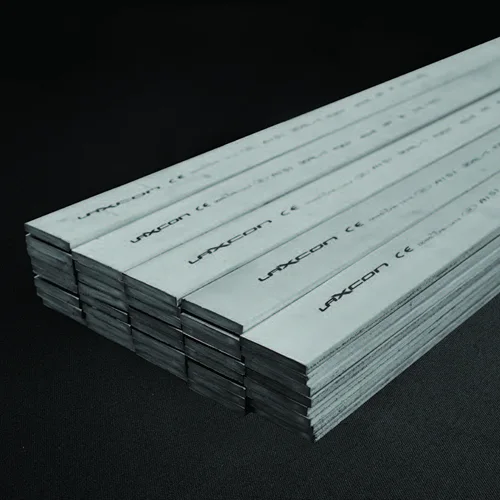 HRAP Flat Bars
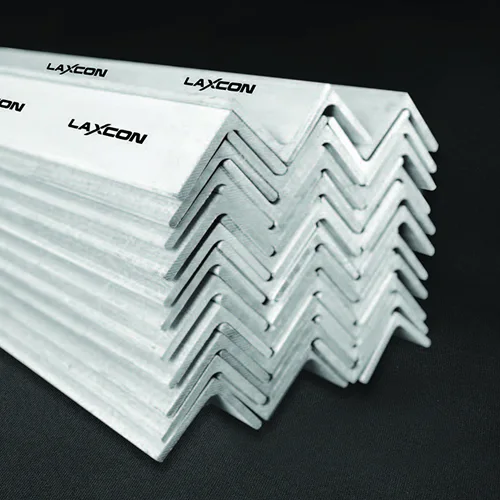 HRAP Equal Angles
 HRAP Unequal Angles
 Threaded Bars
 Hot Rolled Round Cornered Squares (RCS) Bars
 Hot Rolled Round Bars
 Continuous Cast Billets / Blooms
 Channels
 Forging Quality Ingots
 Precipitation Hardening Steels
 Duplex Steel
 T-Profile