HSN Codes for Stainless Steel and Alloy Steel Bars, Sections, Billets and Pipes
Send an enquiryAn HSN code is the number that classifies a traded product under the Harmonized System of Nomenclature, the goods classification maintained by the World Customs Organization and applied by India in its customs tariff, its foreign trade policy and its goods and services tax. The first six digits are international and identify the same product in every country that applies the system. India adds two digits to form an eight-digit tariff item, defined in the First Schedule to the Customs Tariff Act, 1975. Stainless and alloy steel ingots, billets, bars, angles and sections are classified in Chapter 72 of that schedule, Iron and steel; seamless tubes and pipes are classified in Chapter 73, Articles of iron or steel. Within Chapter 72 the code of a steel product is fixed by three things in turn: the kind of steel, the form of the product, and the working it has received after hot rolling.
The Harmonized System and India's eight-digit codes
The Harmonized System is defined by an international convention of 1983 and revised at intervals of about five years; the edition applied in India since 1 January 2022 is HS 2022. Its codes are hierarchical: the first two digits name the chapter, the first four the heading and the first six the subheading. Tariff item 7222 20 11 lies in Chapter 72, heading 7222 (other bars and rods, and angles, shapes and sections, of stainless steel) and subheading 7222 20 (bars and rods not further worked than cold-formed or cold-finished). The last two digits are Indian. The schedule prints the code in groups of four, two and two; trade documents often write it as 72222011.
The same codes serve customs, trade policy and tax. Bills of entry and shipping bills carry them, and the importer or exporter self-assesses the classification under section 17 of the Customs Act, 1962, subject to verification by the proper officer. The Directorate General of Foreign Trade publishes them as ITC (HS) codes, with Schedule 1 for import policy and Schedule 2 for export policy. The goods and services tax rate notification for goods adopts the chapters, headings, sub-headings and tariff items of the First Schedule, together with its rules of interpretation and its Section and Chapter Notes. On a tax invoice, Notification No. 12/2017-Central Tax, as amended by Notification No. 78/2020-Central Tax from 1 April 2021, requires four digits from a supplier whose aggregate turnover in the preceding financial year was up to five crore rupees and six digits above that.
Stainless, other alloy and non-alloy steel
Chapter 72 has four sub-chapters: primary materials and products in granular or powder form; iron and non-alloy steel; stainless steel; and other alloy steel, together with hollow drill bars. The Chapter Notes assign a steel to one of the last three by composition alone.
- Stainless steel is alloy steel containing 1.2 percent or less of carbon and 10.5 percent or more of chromium by weight, with or without other elements.
- Other alloy steel is steel that is not stainless but contains at least one element at or above a stated proportion, among them 0.3 percent chromium, 0.08 percent molybdenum, 0.3 percent nickel, 1.65 percent manganese, 0.6 percent silicon, 0.1 percent vanadium and 0.0008 percent boron.
- Non-alloy steel is steel that meets neither definition.
The austenitic, ferritic, martensitic, duplex and precipitation hardening grades in common use meet the stainless definition, so bars of 304, 410, 2205 and 17-4 PH fall in sub-chapter III. SAE 4140, with 0.80 to 1.10 percent chromium and 0.15 to 0.25 percent molybdenum, passes two of the alloy thresholds and falls in sub-chapter IV, as do 4340, EN 19 and EN 24. EN 8, specified with 0.36 to 0.44 percent carbon, 0.60 to 1.00 percent manganese and no alloying element, is non-alloy steel. The thresholds apply to the actual analysis, so a heat of a nominally plain carbon steel whose residual chromium or nickel reaches 0.3 percent is other alloy steel. The alloy steel family page gives the compositions of the alloy grades.
Semi-finished products, bars and sections
Within each sub-chapter the Chapter Notes separate products by form. Semi-finished products are continuously cast products of solid section, whether or not primary hot rolled, and other solid products that have had no more than primary hot rolling or rough shaping by forging. Bars and rods are products of uniform solid cross-section along their whole length, round, oval, rectangular, square, triangular or another convex polygon, that are not semi-finished products, flat-rolled products, hot rolled bars in irregularly wound coils or wire. Angles, shapes and sections are solid products of uniform cross-section that fit none of these definitions, such as angles, channels and T-sections.
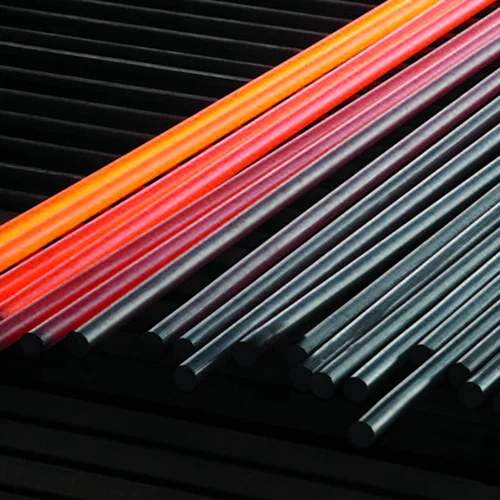
The line between a flat bar and a flat-rolled product is dimensional. A straight length of rectangular section 4.75 mm or more thick is flat-rolled only if its width exceeds 150 mm and is at least twice its thickness. A stainless hot rolled flat of that thickness and 150 mm wide or less is therefore a bar of heading 7222, not a flat-rolled product of heading 7219 or 7220. A hollow bar that is not a hollow drill bar as the notes define it is classified with seamless tubes in heading 7304.
Heading 7218: stainless steel ingots and semi-finished products
Heading 7218 covers stainless steel in ingots or other primary forms and semi-finished products of stainless steel. It has four tariff items.
- 7218 10 00: ingots and other primary forms.
- 7218 91 00: semi-finished products of rectangular (other than square) cross-section.
- 7218 99 10: other semi-finished products, billets.
- 7218 99 90: other semi-finished products, other.
A forging ingot, square, round or fluted, is a primary form of 7218 10 00, and a continuously cast rectangular bloom is a product of 7218 91 00. Square and round cast sections fall in 7218 99, which names billets as a separate item without defining the word. The ingot, bloom and billet article describes the forms. Heading 7224 is the counterpart for other alloy steel: 7224 10 00 for ingots and other primary forms, and subheading 7224 90 for semi-finished products, with billets at 7224 90 91.
Heading 7222: stainless steel bars, angles, shapes and sections
Heading 7222 covers bars and rods of stainless steel, other than hot rolled bars in irregularly wound coils (heading 7221), together with stainless angles, shapes and sections. Its subheadings follow the working the product has received.
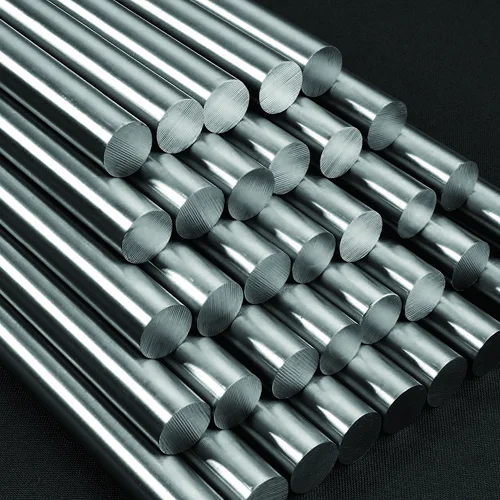
- 7222 11: bars and rods not further worked than hot-rolled, hot-drawn or extruded, of circular cross-section.
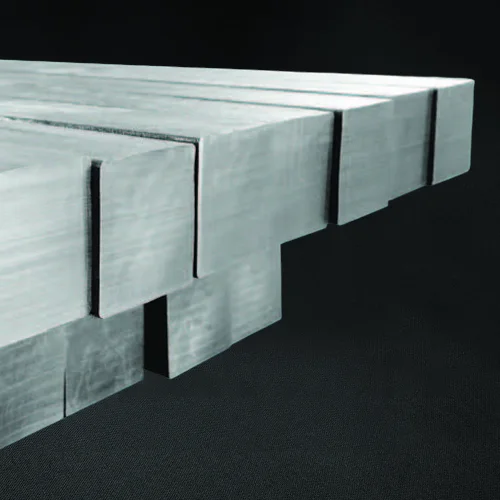
- 7222 19: the same, of other cross-sections, such as flats, squares and hexagons.
- 7222 20: bars and rods not further worked than cold-formed or cold-finished.
- 7222 30: other bars and rods.
- 7222 40: angles, shapes and sections.
India divides each bar subheading into bright bars and other bars, and each of those by type of stainless steel. The last two digits are 11, 12 or 19 for bright bars of the chromium type, the nickel chromium austenitic type and other types, and 91, 92 or 99 for other bars of the same types. Cold-finished bright bar of 304 is therefore 7222 20 12, and hot rolled black round bar of 410 is 7222 11 91. The notes to Chapter 72 define neither type nor the term bright bar. In trade use the names correspond to the chromium stainless steels, ferritic or martensitic, of the 400 series, and the austenitic chromium-nickel steels of the 300 series. Duplex, precipitation hardening and chromium-manganese grades fit neither name directly, and the schedule does not state which line they take. Subheading 7222 40 divides into 7222 40 10 for sections "of thickness of 80 mm and above" and 7222 40 20 for those "of below 80 mm".
Hot-rolled, cold-finished and other bars
The schedule uses the wording "not further worked than hot-rolled, pickled" for flat products of heading 7208, which indicates that pickling leaves a product in the hot-rolled class. Hot rolled round bar supplied black is a product of 7222 11, and hot rolled flat bar of 7222 19. Cold drawing reduces a bar through a die at room temperature and is cold forming, so cold drawn rounds, flats, hexagons and squares belong to 7222 20.
Peeling, turning and grinding remove metal at room temperature, and the tariff text does not define cold-finished. Rulings of United States Customs and Border Protection, made under the same six-digit subheadings, read the term by purpose. Ruling HQ 956468 (1994) noted that the Explanatory Notes to the Harmonized System list annealing, and rough turning to remove scale, among operations that do not change the heading, and held that hot rolled bars turned to set imperial sizes were cold-finished. Ruling N345262 (2025) treated peeling of 17-4 PH bar as a cold working operation and classified the bar in 7222 20, and ruling N299512 (2018) placed cold worked 316L bar centreless ground to a closer diameter tolerance in the same subheading. On that reading a bar turned only to remove scale stays in the hot rolled class, while a bar peeled, or turned or ground to a set size or tolerance, is cold-finished. These rulings bind only United States customs. Subheading 7222 30 is residual. Because the Indian schedule opens bright bar lines under all four bar subheadings, the word bright on an order does not by itself fix the subheading; the finishing route does, as the bright bar and black bar article describes.
Alloy steel bars follow the same pattern in heading 7228: 7228 30 for bars not further worked than hot-rolled, hot-drawn or extruded, 7228 40 00 for bars not further worked than forged, 7228 50 for bars not further worked than cold-formed or cold-finished, 7228 60 for other bars and 7228 70 for angles, shapes and sections. Coiled hot rolled alloy bar has heading 7227. Non-alloy carbon steel bars fall in heading 7214 when not further worked than forged, hot-rolled, hot-drawn or hot-extruded, and in heading 7215 when cold-formed or cold-finished.
Heading 7304: seamless stainless steel tubes and pipes
Heading 7304 covers seamless tubes, pipes and hollow profiles of iron, other than cast iron, or of steel. Its stainless subheadings separate products first by use and then by finishing.
- 7304 11: stainless line pipe of a kind used for oil and gas pipelines: tubes and pipes (7304 11 10), blanks for tubes and pipes (7304 11 20) and other (7304 11 90).
- 7304 22 00 and 7304 24 00: stainless drill pipe, and other stainless casing and tubing of a kind used in drilling for oil or gas.
- 7304 41 00: other stainless tubes and pipes of circular cross-section, cold-drawn or cold-rolled (cold-reduced).
- 7304 49 00: the same, not cold-drawn or cold-rolled.
A stainless heat-exchanger or boiler tube drawn cold from a hollow is an item of 7304 41 00. A hot-finished stainless tube of circular section that is neither line pipe nor oil-country goods falls to 7304 49 00, and the schedule names blanks for tubes only within the line pipe subheadings. Alloy steel tubes of circular cross-section take 7304 51 and 7304 59, divided by outside diameter at 114.3 mm and 219.1 mm. Welded stainless tubes are not in heading 7304: those of circular cross-section with an outside diameter above 406.4 mm are in heading 7305, and smaller ones, other than line pipe and oil-country goods, are 7306 40 00.
Laxcon Steels products by heading
Laxcon Steels melts, rolls and finishes stainless and alloy steel long products in Ahmedabad, Gujarat. The table maps its product families to the headings and subheadings above by form and supply condition; the final digits follow the type of steel and, for bars, whether the bar is bright. PSQ bars are precision shaft quality bars.
| HSN code | Product family | Form and supply condition |
|---|---|---|
| 7218 10 00 | Forging quality ingots | Ingot, square, round or fluted |
| 7218 91 00 | Billets and blooms | Continuous cast, rectangular section |
| 7218 99 | Billets and blooms | Continuous cast, square or round section |
| 7222 11 | Hot rolled round bars | Hot rolled, black |
| 7222 19 | HRAP flat bars | Hot rolled, annealed and pickled |
| 7222 19 | Hexagonal bright bars | Black or hot rolled, annealed and pickled |
| 7222 19 | Square bright bars | Black or hot rolled, annealed and pickled |
| 7222 20 | Bright bars | Cold drawn, or peeled, turned or ground to bright-bar tolerance |
| 7222 20 | PSQ bars | Ground and polished |
| 7222 20 | Hexagonal bright bars | Cold drawn |
| 7222 20 | Square bright bars | Cold drawn |
| 7222 20 | Cold drawn flat bars | Cold drawn and pickled |
| 7222 40 | HRAP equal angles | Hot rolled, annealed and pickled |
| 7222 40 | HRAP unequal angles | Hot rolled, annealed and pickled |
| 7222 40 | Channels | Hot rolled, annealed and pickled |
| 7222 40 | T-profile | Hot rolled, annealed and pickled |
| 7304 | Pipes and tubes | Seamless heat-exchanger, boiler and line tube; mother hollow |
The duplex steel and precipitation hardening steel families are grades rather than forms and take the stainless heading of the form supplied. Ingots, billets, bars and sections in the alloy steel grades take headings 7224 and 7228, seamless tubes in those grades take subheadings 7304 51 and 7304 59, and bars in the carbon steel EN 8 take headings 7214 and 7215. Laxcon Steels supplies bright bar from 5 to 115 mm and hot rolled round bar from 16 to 125 mm; the full range is on the products page.
Frequently asked questions
What is the HSN code for stainless steel bright bars?
Stainless steel bright bar that is cold drawn is classified in subheading 7222 20, bars and rods not further worked than cold-formed or cold-finished, and published customs rulings treat bar peeled, or turned or ground to a set size, as cold-finished in the same subheading. The eight-digit item is 7222 20 11 for the chromium type, 7222 20 12 for the nickel chromium austenitic type such as 304 and 316, and 7222 20 19 for other types.
What is the HSN code for stainless steel round bars?
A stainless steel round bar not further worked than hot-rolled, hot-drawn or extruded is classified in subheading 7222 11. A cold drawn round bar is classified in 7222 20, and published customs rulings treat a peeled bar, or one turned or ground to a set size, as cold-finished in the same subheading. The last two digits follow whether the bar is bright and the type of stainless steel.
What is the HSN code for stainless steel billets?
Stainless steel billets are semi-finished products of heading 7218, and the tariff item for billets is 7218 99 10. Semi-finished products of rectangular, other than square, cross-section such as rectangular blooms are 7218 91 00, and ingots are 7218 10 00.
What is the HSN code for stainless steel seamless pipe?
Seamless stainless steel tubes and pipes of circular cross-section are classified in heading 7304: 7304 41 00 when cold-drawn or cold-rolled and 7304 49 00 otherwise. Stainless line pipe of a kind used for oil and gas pipelines has its own subheading, 7304 11. Welded stainless pipe is classified in heading 7306, or in heading 7305 when its outside diameter exceeds 406.4 mm.
How many digits of the HSN code must a GST invoice show?
Under Notification No. 12/2017-Central Tax as amended by Notification No. 78/2020-Central Tax, a supplier whose aggregate turnover in the preceding financial year was up to five crore rupees shows four digits, and a supplier above five crore rupees shows six. A supplier in the lower band may omit the code on invoices to unregistered persons.
Sources
- The Customs Tariff Act, 1975, First Schedule, Section XV, Chapter 72, Iron and steel: Chapter Notes 1(d) to 1(p) and headings 7208, 7214, 7215, 7218, 7221, 7222, 7224, 7227 and 7228.
- The Customs Tariff Act, 1975, First Schedule, Chapter 73, Articles of iron or steel: headings 7304, 7305 and 7306.
- The Finance Bill, 2026, as introduced: amendments to the First Schedule.
- The Customs Act, 1962, section 17: assessment of duty.
- International Convention on the Harmonized Commodity Description and Coding System, 1983, and its Nomenclature, 2022 edition.
- Directorate General of Foreign Trade, ITC (HS) 2022, Schedule 1 (Import Policy) and Schedule 2 (Export Policy).
- Central Goods and Services Tax Rules, 2017, rule 46; Notification No. 12/2017-Central Tax, as amended by Notification No. 78/2020-Central Tax.
- Notification No. 9/2025-Central Tax (Rate): explanation on the meaning of tariff item, sub-heading, heading and Chapter.
- United States Customs and Border Protection, rulings HQ 956468 (turned bars), N345262 (peeled 17-4 PH stainless steel bar) and N299512 (centreless ground 316L bar).
- SAE J404, Chemical compositions of SAE alloy steels; BS 970-1, Wrought steels for mechanical and allied engineering purposes (080M40, EN 8).