Bright Bar vs Black Bar: What the Finishing Pass Changes
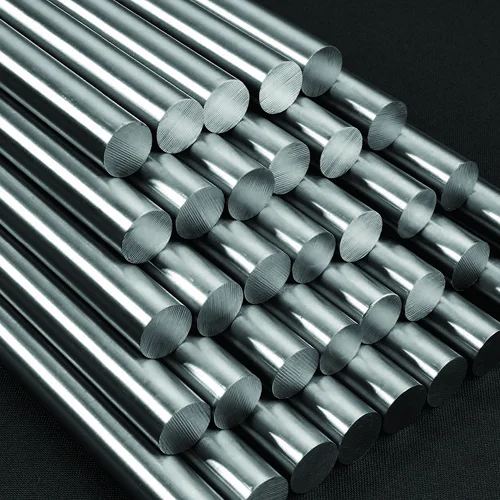
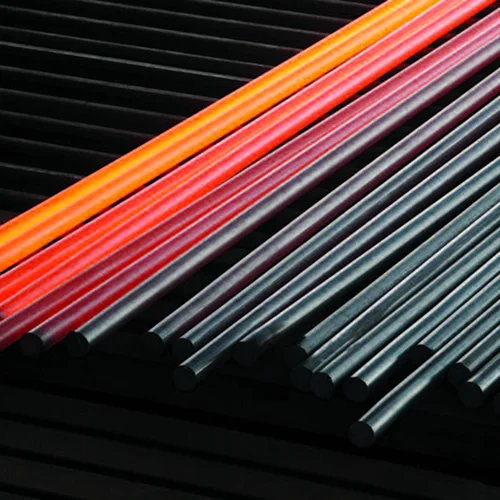
Send an enquiryBlack bar is the trade name for hot rolled bar supplied as it leaves the mill, with the dark oxide scale of rolling on its surface. Bright bar is the same bar after a cold finishing pass, drawn, peeled, turned or ground, that removes the scale and fixes the diameter to a tolerance class and the surface to a stated roughness. The two are the same grade from the same heat, and a certificate for either carries the same chemistry. What separates them is dimensional accuracy, surface, straightness, size range and price, and the choice between them is decided by how much of the bar the customer will remove in machining.
The difference in one table
| Property | Black bar (hot rolled) | Bright bar (cold finished) |
|---|---|---|
| Surface | Rolling scale; matt grey after annealing and pickling | Scale removed; 0.8 to 1.6 micrometres Ra drawn, 0.2 to 0.4 ground |
| Diameter tolerance | EN 10060 or ASTM A484 allowance, about plus or minus 0.8 mm at 50 mm | ISO 286 class: h9 at 50 mm is 0 / -0.062 mm |
| Straightness | To the rolling standard, typically 4 mm per metre or better | Straightened after finishing, 0.5 mm per metre or better |
| Size range at Laxcon | 16 to 125 mm rolled; 120 to 550 mm forged | 5 to 115 mm |
| Mechanical properties | Annealed values on the certificate | Annealed values, or as-drawn values with a higher yield where supplied unannealed |
| Machining allowance the customer adds | 1.5 to 3 mm on diameter | None on a ground or drawn bar used as supplied; 0.25 to 0.5 mm on a peeled bar |
| Price | Base | Higher, by the finishing pass and the yield loss of the material removed |
What a black bar is
A hot rolled bar is formed at around 1,100 degrees Celsius by passing a reheated billet through a sequence of grooved rolls until it reaches the ordered diameter. The surface that results carries an oxide scale, a slight decarburised or chromium-depleted skin under it, and the small seams and roll marks that any rolled product has. Its diameter varies within the allowance of EN 10060 or ASTM A484, and the section is slightly oval. For stainless steel the black bar is normally supplied annealed and pickled, so that the scale is removed in acid and the corrosion resistance of the grade is restored, but the dimensional state is unchanged by pickling. A black bar is the correct product when every surface of the finished part will be machined, because the machining removes the skin and the allowance in one operation and the finishing pass of a bright bar would have been paid for and then cut away.
What the finishing pass does
Cold drawing pulls the annealed and pickled black bar through a hardened die about 1 to 2 mm smaller than the bar. The die sizes the diameter to h9, h10 or h11, burnishes the surface to about 0.8 to 1.6 micrometres Ra and cold works the skin, which raises the yield strength of the bar as drawn; where the annealed properties are required the bar is annealed again after drawing and the certificate states the annealed values. Peeling and turning remove the skin with a cutting tool instead, and produce a bar with no cold work, a fully clean surface and a plus tolerance (k12 or k13 under EN 10278) that leaves stock for a later grinding operation. Centreless grinding takes a drawn or peeled bar between an abrasive wheel and a regulating wheel and holds h6 to h9 with a surface of 0.2 to 0.4 micrometres Ra. Every route ends with straightening and, where ordered, polishing to K240 or K320 grit and chamfering of the ends. The bar that results goes straight into a lathe chuck, a bearing seat or a guide bush with no preparatory cut. The tolerance classes themselves are set out in the tolerance class reference.
Size range
The two products overlap between 16 and 115 mm and each covers a range the other does not. Below 16 mm a stainless bar cannot be hot rolled to a usable tolerance and is supplied bright only, drawn from rod; Laxcon's bright range starts at 5 mm. Above 115 mm the cold finishing routes reach their limits and the bar is supplied black, rolled to 125 mm or forged and proof machined from 120 to 550 mm. Within the overlap the choice is the machining question above.
Cost
A bright bar costs more than the black bar it is made from for two reasons. The finishing pass is a separate operation with its own labour, tooling and energy. And the pass removes material: a peeled bar loses 1 to 3 mm of diameter to the tool, a drawn bar 1 to 2 mm to the die, so a tonne of black bar yields less than a tonne of bright bar and the loss is priced into the bright bar. Against that, the customer buying black bar pays for the machining allowance in the machine shop instead of at the works: the material removed in the first cut, the machine time to remove it, and the tool wear from cutting through scale. On a part that is machined all over from a bar of 50 mm and above, the black bar is normally the cheaper route end to end. On a part used as supplied on any surface, on a shaft, or on any bar below 16 mm, the bright bar is the only route.
Selection
Black bar is specified for forging stock, for fully machined components such as flanges, fittings, gear blanks and valve bodies, for heavy shafts that will be turned all over, and for structural bar where the surface does not matter. Bright bar is specified for shafting, pins, spindles, fasteners, machined parts that keep the bar surface on any face, parts made on automatic lathes and screw machines where the bar must feed through a collet, and every size below the rolled range. The order line states which: a black bar by its standard and allowance, "50 mm hot rolled round bar, AISI 304, ASTM A276, EN 10060 tolerance, annealed and pickled"; a bright bar by its route and class, "50 mm bright bar, AISI 304, ASTM A276, cold drawn h9".
Both products from one mill
Laxcon Steels rolls hot rolled round bar from 16 to 125 mm in 51 published diameters and finishes bright bar from 5 to 115 mm by drawing, peeling, grinding and polishing on the same site, so a black bar and a bright bar of the same grade come from the same melt and carry the same heat number. Forged and proof machined bar covers 120 to 550 mm, and precision shaft quality bar covers the bright bars that are additionally held to a fit and a straightness for rotating service.
Sources
- EN 10278, Dimensions and tolerances of bright steel products.
- EN 10060, Hot rolled round steel bars for general purposes, dimensions and tolerances on shape and dimensions.
- ASTM A276/A276M, Standard Specification for Stainless Steel Bars and Shapes; ASTM A484/A484M, General Requirements for Stainless Steel Bars, Billets, and Forgings.
- ISO 286-2, tables of standard tolerance classes and limit deviations for holes and shafts.