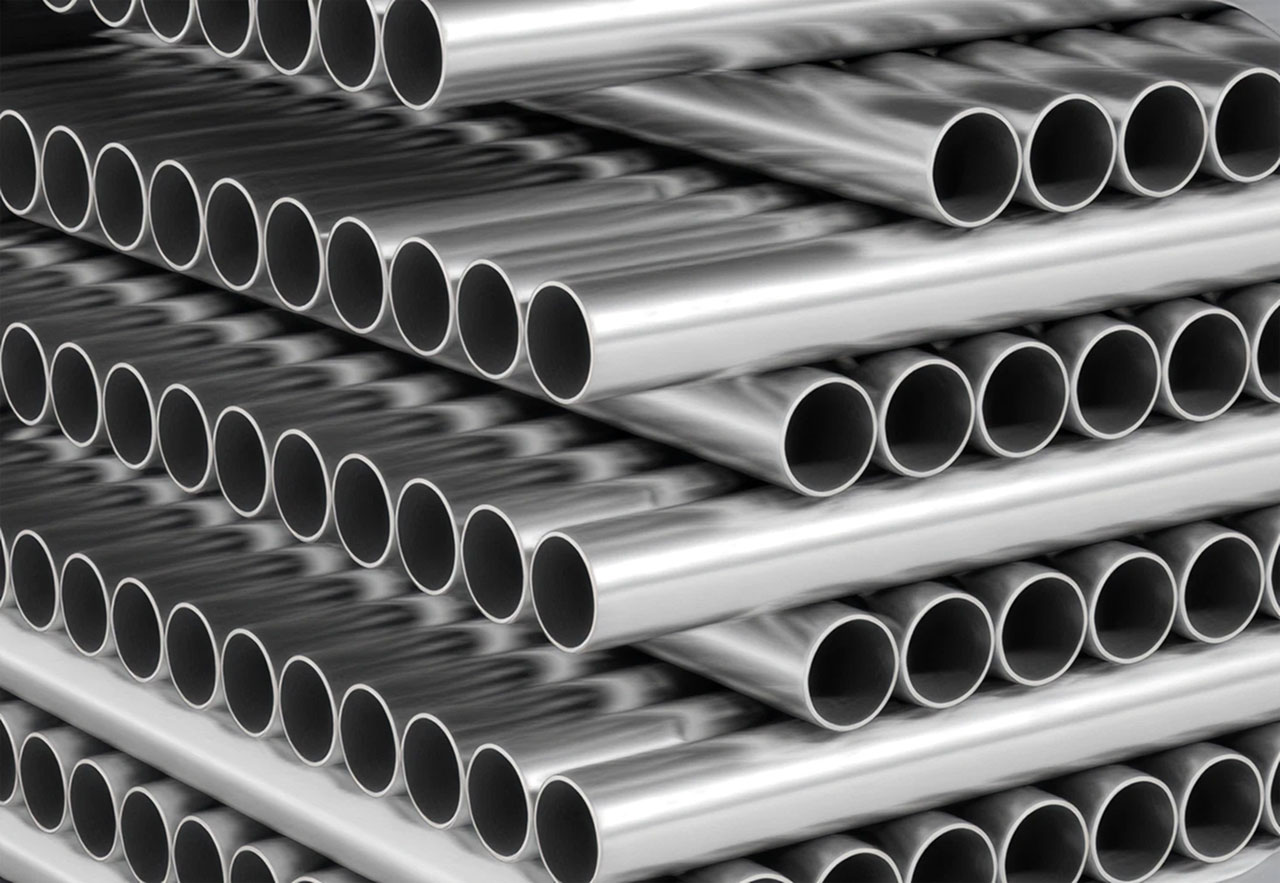
PSQ stands for pump shaft quality, also referred to as precision shaft quality. These are stainless steel bars manufactured to tight dimensional tolerances and a high degree of straightness for rotating shaft applications. The manufacturing process involves turning, grinding, and polishing the bar between centres to produce a smoother surface finish and a more precise outside diameter than standard bright bars.
They exist because rotating equipment is unforgiving. Even a small deviation in straightness or diameter causes vibration, misalignment, and premature seal or bearing failure. PSQ bars eliminate those problems at the raw material stage.
TL: DR – Summary
- PSQ (pump shaft quality) bars are precision-ground stainless steel bars built for rotating shaft applications where tight dimensional control and straightness are non-negotiable.
- They go into pumps, motors, cylinder shafts, piston shafts, valve stems, and bearing bars across water treatment, oil and gas, chemical processing, and marine industries.
- Specs that matter most: diameter tolerance (h7, h8, h9), straightness (0.015″ TIR per 10 ft), surface finish, and ultrasonic or eddy current test results.
- Grade selection depends on service environment: 304 for general indoor use, 316 for marine or chemical exposure, duplex for high-strength chloride-heavy conditions.
- Before ordering, ask the manufacturer for traceability documentation, mill test certificates, and proof of inspection.
Psq Vs Regular Bright Bars
Standard bright bars are cold-finished with decent tolerances, but produced for general-purpose machining. PSQ bars go further with tighter diameter tolerances, superior straightness, and better surface quality. If you are buying bar stock for a pump shaft, valve stem, or any rotating component, bright bars will often fall short of the straightness and runout specs your application demands.
Types of PSQ Bars
Pump shaft quality (PSQ) bars
This is the original and most common use case. When someone requests PSQ bars, they usually need bar stock for pump shafts. These bars are ground and straightened to minimise vibration during high-speed rotation. A failed pump shaft in a chemical plant or water treatment facility can halt an entire production line, so reliability is non-negotiable.
Shaft bars for general rotating applications
PSQ bars are not limited to pumps. Buyers specify them for cylinder shafts, boat shafts, piston shafts, valve shafts, and bearing bars. The common thread is rotation under load. Any rotating component that needs dimensional stability, minimal vibration, and reliable seal or bearing contact over long service intervals will benefit from PSQ-grade bar stock.
Custom-engineered PSQ bars
Not every application fits a standard catalogue item. Custom PSQ bars can be specified by grade, diameter and length, tolerance class, heat treatment condition, testing requirements, and surface finish. If your application has a unique combination of these parameters, a custom order is often the most practical path.
Specifications That Actually Matter for PSQ Bars
Size range and lengths
Most PSQ bar suppliers stock diameters from about 8 mm (1/2″) up to 80-100 mm (roughly 4″). Lengths typically run up to 20-26 feet in random lengths.
For reference, Laxcon Steels produces PSQ bars in the 8-81 mm diameter range with lengths up to 6.4 metres. This covers the majority of pump and rotating equipment shaft requirements without needing custom lengths.
Tolerances and straightness
When a spec sheet says “tight tolerance,” what does that mean for your application? It means the bar diameter is held within a narrow band so that bearings, seals, and housings fit without excessive clearance or interference. Common tolerance classes for PSQ bars are h7, h8, h9, j6, f7, and f8 per ISO 286 standards.
Straightness is the other half of the equation. A typical PSQ straightness spec is 0.015″ TIR (total indicator runout) per 10 feet. That means the bar rotates with minimal wobble, which directly reduces vibration and wear on mating parts. PSQ bars are often more than eight times straighter than standard ASTM A108 requirements.
Mechanical properties
Rotating shafts bear axial and radial loads at speed, so strength matters. PSQ bars typically meet a minimum yield strength of 75 ksi with tensile strength of 100 ksi. For applications needing more, some manufacturers offer 304 stainless steel shafting with an upgraded 100 ksi tensile option. Confirm these values with the supplier before ordering.
Surface finish and machinability
A better surface finish does two things: it reduces friction against seals and bearings (which extends their life), and it gives machinists a more consistent starting point for any secondary operations. PSQ bars are ground and polished to a controlled surface roughness, which means less rework and more predictable results during final machining.
Grades Used For PSQ Bars
304 stainless (general-purpose shafting)
Grade 304 is the workhorse. It handles most indoor and mildly corrosive environments well. If your pump or motor operates in a climate-controlled plant with clean water or mild chemicals, 304 is usually sufficient and costs less than alternatives.
316 stainless (marine, coastal, chemical splash)
Grade 316 contains molybdenum, which gives it significantly better resistance to chlorides and acidic chemicals. If the shaft will be exposed to seawater, brackish water, coastal air, or chemical splash zones, 316 is the safer choice. The price premium over 304 is typically 15-25%, but it pays for itself by avoiding early corrosion failures.
Uses And Applications
1. Pumps and motors
Pump shafts are the most common application for PSQ bars. Centrifugal pumps in water treatment, chemical processing, and HVAC systems rely on shafts that run true at high RPM. A shaft that is even slightly out of round or bent will accelerate bearing failure and destroy mechanical seals.
2. Cylinder, boat, piston, and valve shafts
Hydraulic cylinder shafts need a polished, dimensionally stable bar to maintain seal integrity under pressure. Boat shafts operate in corrosive saltwater while transmitting heavy torque. Piston shafts and valve stems rely on tight tolerances to control fluid flow accurately. In every case, the straightness and surface finish of the PSQ bar directly affect performance and service life.
3. Bearing bars and other rotating parts
Bearing bars must fit precisely into housings. An oversized bar will crack the bearing race during press-fitting, while an undersized one lets the bearing spin on the shaft. PSQ tolerance classes like h7 and j6 hit the exact fit range that bearings require for reliable operation.
Testing And Quality Controls Buyers Should Expect
Three tests form the baseline for PSQ bar quality:
- Ultrasonic testing (UT) detects internal flaws such as inclusions, voids, or cracks invisible on the surface. Any reputable PSQ bar manufacturer performs UT as standard.
- Eddy current testing is sometimes specified for detecting surface and near-surface defects that UT might miss.
- Positive material identification (PMI) confirms the bar’s chemical composition matches the ordered grade. This quick spectrometer check eliminates the risk of a material mix-up.
Laxcon Steels performs ultrasonic flaw testing on all PSQ bars and offers eddy current testing per customer requirement. PMI with handheld spectrometers is standard across their product range.
Packaging and handling for straight bars
A perfectly straight bar is useless if it arrives bent. PSQ shafting needs careful packaging because its tight tolerances can be ruined by rough handling during transit. Distance rings between bars prevent contact damage, and plywood or hardwood boxes protect against bending forces during shipping. If your supplier ships PSQ bars without rigid packaging, that is a red flag.
HS code for shafts and PSQ bars
If you are importing or exporting PSQ bars, the HS (Harmonized System) code matters because it determines customs duties, affects trade compliance documentation, and speeds up clearance at the port.
Stainless steel bars and rods fall under HS heading 7222. Cold-finished (ground, polished) stainless bars like PSQ bars typically classify under 7222.20. The exact sub-heading depends on the bar’s cross-section, alloy composition, and finishing method.
A practical note: HS codes can vary by country interpretation and exact product definition. Always confirm the correct classification with your customs broker or freight forwarder before shipping. Do not rely solely on the supplier’s HS code on the invoice.
Selecting The Right Psq Bar Manufacturer (Procurement Checklist)
When evaluating PSQ bar suppliers, run through these points:
- Proven PSQ size range covering your required diameters and lengths
- Demonstrated ability to hold straightness and tolerance specs consistently
- Consistent mechanical properties backed by mill test certificates
- Testing capabilities covering UT, eddy current, and PMI
- Heat treatment options available when your application requires them
- Full traceability from melt to finished bar with documentation
- Export-quality packing that protects straightness and surface finish
- Reliable lead times with a track record of on-time delivery
Conclusion
PSQ bars are precision-ground stainless steel bars designed for rotating shaft applications that demand tight tolerances and high straightness.
The specs that drive performance are diameter tolerance class, straightness (TIR), mechanical strength, surface finish, and the right grade for your service environment.
They are used across pumps, motors, hydraulic cylinders, marine shafts, valve stems, and bearing applications.
The right manufacturer will provide consistent quality, full testing, traceability documentation, and packaging that protects the bar through transit.
If you have a specific requirement, share your spec or RFQ with Laxcon Steels to get the right PSQ bar recommendation for your application.