Most steel in the world falls into one of two camps: carbon steel or stainless steel. Carbon steel is composed of iron and carbon, with carbon content typically ranging from 0.05% to 2.5% by weight, per the American Iron and Steel Institute (AISI) definition. Stainless steel, sometimes called inox steel (from the French inoxydable), is an iron alloy containing at least 10.5% chromium, along with carbon typically kept below 0.08% in common grades like 304 and 316.
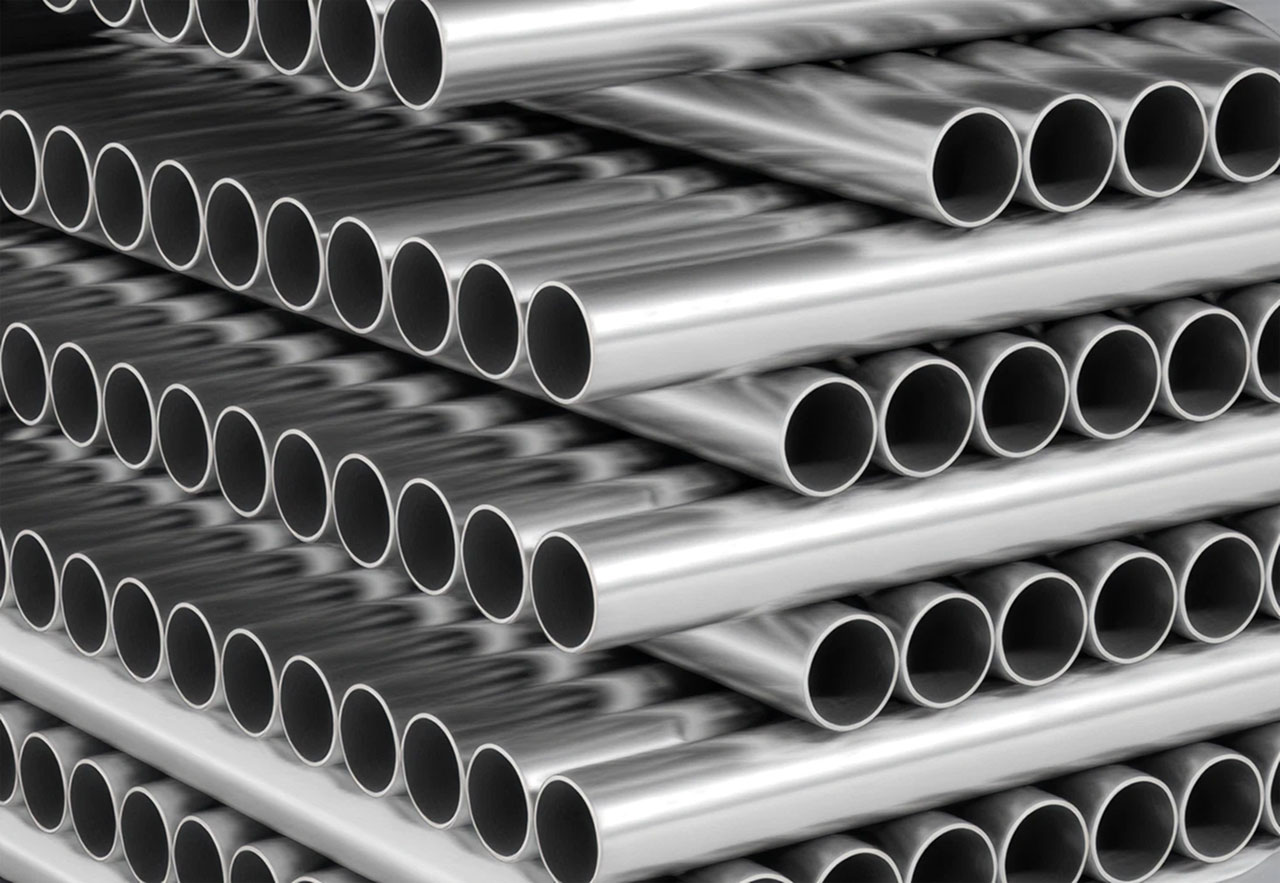
That chromium reacts with environmental oxygen to form a thin, self-healing chromium oxide layer, which is the protective layer that gives stainless steel its corrosion resistant properties.
The choice between carbon steel and stainless steel depends on the environment, load requirements, temperature range, and budget of a given project. At Laxcon Steels , a stainless steel manufacturer with operations since 1979, we work with buyers across 82+ countries to match the right material to the right application. This guide breaks down how these two steel families differ in composition, mechanical properties, corrosion resistance, and cost, so you can make that decision with confidence.
TL;DR
- Carbon steel is an alloy of iron and carbon (0.05–2.5% C) that delivers high strength at low cost, making it the go-to metal for structural beams, automotive parts, and industrial machinery.
- Stainless steel adds at least 10.5% chromium to the mix, forming a self-repairing chromium oxide layer that resists rust in wet, marine, and chemical environments.
- Pick carbon steel when your project needs raw strength in a dry setting.
- Pick stainless steel when corrosion resistance, hygiene, or heat resistance matter more than upfront savings.
Quick answer: the differences at a glance
Carbon steel excels in strength and cost for dry, controlled environments. Stainless steel provides better corrosion resistance for wet, marine, food-processing, and hygiene-sensitive settings. If your application faces moisture, chemicals, or salt, stainless is the safer bet. If budget and raw load-bearing capacity are top priorities in a dry or indoor context, carbon steel wins.
| Property | Carbon steel | Stainless steel |
| Composition | Iron + 0.05–2.5% carbon, minimal alloying elements | Iron + ≥10.5% chromium + <1.2% carbon, often nickel/molybdenum |
| Corrosion resistance | Low. Rusts when exposed to moisture; needs coatings or paint | High. Chromium oxide layer self-repairs and blocks rust |
| Typical cost | Lower upfront cost; considered a low-cost metal for large components | Higher material cost; life-cycle savings in corrosive environments |
| Maintenance | Requires regular painting, galvanising, or oiling | Low maintenance due to natural corrosion resistance |
| Best environments | Dry, indoor, controlled-humidity settings | Wet, marine, chemical, food, medical, and humid environments |
Carbon steel types and composition
Carbon steel is defined by the AISI as an iron-carbon alloy with no required minimum of chromium, cobalt, nickel, titanium, tungsten, or vanadium. Its mechanical properties shift based on how much carbon is in the mix. More carbon means more hardness and wear resistance, but less ductility and weldability. The carbon steel Wikipedia entry breaks it down into four tiers:
| Type | C % range | Properties | Common uses |
| Low carbon (mild) | 0.05–0.25% | Soft, ductile, easy to weld; low yield strength | Auto body panels, pipes, construction components, food cans |
| Medium carbon | 0.25–0.60% | Stronger, responds well to heat treatments | Railway tracks, train wheels, crankshafts, gears |
| High carbon | 0.60–1.0% | High hardness, significantly harder and more wear resistant | Cutting tools, springs, high-strength wire, dies |
| Ultra-high carbon | 1.25–2.0% | Extremely hard, brittle; varying mechanical properties based on heat treatment | Specialty knives, axles, punches |
By contrast, stainless steel keeps its carbon content well below these levels, typically under 0.08% in austenitic grades like 304 and 316. This low carbon content improves weldability and lets the chromium do its corrosion-fighting work without interference.
Stainless steel composition and grades
Stainless steel is an alloy of iron, carbon, and chromium, often with nickel, molybdenum, and other alloying elements added to fine-tune performance. The American Iron and Steel Institute requires a minimum 10.5% chromium by mass for a steel to qualify as “stainless.”
Many grades push that figure well above 16%. Nickel improves formability, ductility, and oxidation resistance, while molybdenum strengthens resistance to pitting in chloride-rich environments. Austenitic steels like 304 and 316 are the most widely used stainless steel grades.
| Grade | Cr % | C % max | Other elements | Typical uses |
| 304 | 18% | 0.08% | 8% Ni | Kitchen equipment, food processing, medical equipment |
| 316 | 16% | 0.08% | 10% Ni, 2% Mo | Marine hardware, industrial piping, chemical processing |
| 430 (Ferritic) | 16–18% | 0.12% | Low Ni | Automotive trim, appliances, indoor architecture |
| 2205 (Duplex) | 22% | 0.03% | 5% Ni, 3% Mo, N | Oil & gas, offshore platforms, pressure vessels |
The low carbon percentage in stainless steel is deliberate. When carbon exceeds roughly 0.03% in austenitic steels, it can bind with chromium at grain boundaries during welding, creating zones that no longer resist corrosion. That is why grades labelled “L” (like 304L and 316L) cap carbon even lower. Laxcon Steels manufactures a range of stainless steel grades , including 304 stainless steel , duplex steels , and precipitation hardening steels .
Corrosion resistance comparison
This is where stainless steel and carbon steel diverge most sharply. Stainless steel’s high chromium content (10.5% or more) reacts with oxygen to form a chromium oxide (Cr₂O₃) passive layer on the surface. This barrier is self-healing: scratch it, and the chromium reacts with environmental oxygen again to restore the film. The result is a metal that can sit in humid environments, saltwater spray, or chemical wash-downs without rusting.
Carbon steel has no such protection. Without the chromium oxide layer, the metal’s iron content is exposed to moisture and oxygen, and iron oxide (rust) forms quickly. Even small quantities of humidity in the air can trigger corrosion. For applications exposed to weather, marine conditions, or frequent wash-downs, carbon steel requires secondary protection: paint, galvanising, powder coating, or oil. Miss a spot, and corrosion begins.
This makes stainless steel the standard choice for food-processing equipment, medical devices, coastal structures, and industrial piping . Carbon steel remains suitable where moisture is controlled, like indoor structural beams or dry-climate construction. For a deeper look at how stainless resists oxidation over time, see our article on stainless steel vs rust .
Strength and heat resistance
Strength is where carbon steel holds its ground. Medium and high carbon steels deliver high hardness and wear resistance that make them ideal for load-bearing applications, gears, crankshafts, and cutting tools. High carbon steel is significantly harder than most stainless steel grades, and it outperforms them in applications where abrasion matters more than corrosion.
Stainless steel, though, brings a different kind of toughness. Austenitic grades like 304 and 316 maintain their tensile strength even at elevated temperatures. Some austenitic grades can handle sustained service temperatures above 1000 °F (about 540 °C), and certain specialty alloys are rated for even higher. That heat resistance, combined with good electrical conductivity behaviour and resistance to scaling, makes stainless the first pick for exhaust systems, industrial furnaces, and chemical reactors.
| Property | Carbon steel (typical range) | Stainless steel (typical range) |
| Yield strength | 250–450 MPa (varies with carbon content) | 200–700 MPa (grade dependent) |
| Hardness (Brinell) | 120–300+ HB (higher carbon = harder) | 150–250 HB (austenitic); higher for martensitic |
| Max service temperature | ~425 °C (800 °F) before losing strength rapidly | ~540–1100 °C (1000–2000 °F) depending on grade |
When you need both strength and corrosion or heat resistance in the same package, duplex stainless steels split the difference: roughly twice the yield strength of standard austenitic grades, plus strong resistance to chloride pitting.
Applications and industry use
Carbon steel accounts for roughly 90% of all steel production worldwide, according to industry estimates. Its affordability and high strength make it the default for structural beams, bridges, automotive parts, and industrial machinery in dry conditions.
Stainless steel commands a smaller share of production but dominates in stainless steel applications where corrosion, hygiene, or heat are concerns. In India specifically, stainless steel use is growing in metro rail projects, coastal infrastructure, and pharmaceutical facilities, where its low maintenance over 20–30-year life cycles offsets the higher initial material cost.
| Use case | Preferred steel | Why |
| Building frames, structural beams | Carbon | Low cost, high strength, dry indoor environment |
| Food processing, cookware, cutlery | Stainless | Hygienic properties, corrosion resistance, easy to clean |
| Marine and coastal structures | Stainless (316/Duplex) | Resists saltwater corrosion; Mo-bearing grades handle chlorides |
| Exhaust systems, high-temp piping | Stainless | Heat resistance at elevated temperatures, does not scale |
| Medical equipment, surgical tools | Stainless | Corrosion resistant, easy to sterilise, attractive appearance |
| Cutting tools, dies, springs | High carbon | High hardness, edge retention, wear resistance |
| Railway tracks, gears, crankshafts | Medium carbon | Good balance of strength and toughness from heat treatments |
For a closer look at how stainless steel serves the automobile industry or how India’s stainless sector competes globally, see our articles on India’s stainless steel industry .
Cost, availability, and sustainability
Carbon steel is the lower-cost option in almost every comparison. It is simpler to produce and accounts for about 90% of global steel output. For large-scale structural work, cost per tonne matters more than corrosion resistance, and carbon steel wins that calculation easily.
Stainless steel carries a higher price tag due to its chromium, nickel, and molybdenum content. But framing the comparison on purchase price alone is misleading. In corrosive environments, stainless steel’s low maintenance and long service life often deliver lower total cost of ownership over 20–30 years. A stainless railing on a coastal bridge, for example, will outlast a painted carbon steel railing that needs recoating every few years.
Both metals are 100% recyclable. Stainless steel is often the better environmental choice in applications where its durability means fewer replacements and less waste over the life of a structure. Laxcon Steels uses 100% scrap recycling in its Electric Arc Furnace process, cutting out the blast furnace route that accounts for the bulk of steelmaking emissions.
More on our approach: Green Steel at Laxcon .
How to choose the right steel
Run through four questions before picking a material:
- Environment: Is the part exposed to moisture, chemicals, saltwater, or humid environments? If yes, stainless steel is the safer pick. If the environment is dry or indoor, carbon steel works.
- Load: Does the application need very high hardness or edge retention (cutting tools, dies)? High carbon steel. Normal to high structural loads? Either works, depending on environment.
- Temperature: Will the part see sustained high temperatures above 425 °C? Stainless steel (especially austenitic or heat-resistant grades) holds up better.
- Hygiene and life-cycle cost: Food contact, medical use, or long service in a corrosive environment? Stainless steel’s higher upfront cost is offset by decades of lower maintenance.
A practical Indian example: coastal city infrastructure projects in Mumbai or Chennai increasingly specify stainless steel rebar and cladding because the salt-laden air corrodes carbon steel within years. Inland industrial sheds in Gujarat or Rajasthan, by contrast, use carbon steel frames without issue because humidity stays low.
If your project straddles both conditions, or you are unsure which steel grades suit your requirements, consult a specialist. At Laxcon, our team reviews your specs, environment, and budget before recommending a grade.
Conclusion
Carbon steel delivers strength and cost savings. Stainless steel delivers corrosion resistance, hygiene, and longevity. Neither is universally better; the right material depends on what your project faces.
Share your specifications, environment details, and performance requirements with Laxcon Steels’ stainless steel specialists. We will compare grades, suggest the best fit, and supply material from our manufacturing facility in Ahmedabad, Gujarat.
Contact us here to get started.