Passivation and Pickling of Stainless Steel: Methods, Standards and Tests
Send an enquiryPassivation of stainless steel is a chemical treatment that removes free iron and other contamination from the surface so that the chromium oxide film, the passive layer on which the corrosion resistance of the steel depends, forms evenly and without weak points. The part is immersed in a nitric acid or citric acid solution, which dissolves iron particles and exposed inclusions but leaves the chromium in place. No scale is removed and the dimensions do not change. Pickling is the stronger treatment. A mixture of nitric and hydrofluoric acid dissolves oxide scale, weld heat tint and the chromium-depleted metal beneath them, and takes a thin layer of the steel with it. The two are often used in sequence: pickling for a scaled or welded surface, passivation for a clean surface that has been machined, ground or handled with carbon steel tools. ASTM A380 describes the cleaning, descaling and passivation of stainless steel, and ASTM A967 specifies the passivation treatments and the tests that confirm them.
The passive film and free iron
Stainless steel contains at least 10.5 percent chromium. In air or aerated water the chromium forms a continuous oxide film a few nanometres thick, and the film re-forms by itself where it is scratched. How that film behaves in service, and how it breaks down, is set out in the article on corrosion of stainless steel. Passivation is concerned with what lies on the surface at the moment the film forms.
A particle of carbon steel pressed into the surface by a cutting tool, a clamp, a lifting chain or a grinding disc is not stainless. It rusts in the first damp weather, and the pit it leaves can become the starting point of wider attack. A sulphide inclusion cut open by a machining pass is a second kind of weak point. Left alone in air, the film forms around such features rather than removing them. ASTM A380 accordingly defines passivation, unless a specification says otherwise, as the removal of exogenous iron or iron compounds from the surface by chemical dissolution. The treatment cleans the surface first, and the film then forms on uniform alloy.
What pickling is
Pickling removes oxide. Hot rolling, forging, annealing and welding all grow an oxide on stainless steel, from the thick grey-black scale on a hot rolled bar to the thin straw, brown and blue bands of heat tint beside a weld. The chromium in that oxide was drawn from the metal directly beneath it, which leaves a layer under the scale with less chromium than the grade requires. That layer corrodes more readily than the steel below it, so taking off the visible oxide alone does not restore the surface.
A pickling solution dissolves both. The usual solution for austenitic and duplex grades is a mixture of nitric acid and hydrofluoric acid, used as an immersion bath in a mill or as a paste or gel brushed onto welds in a fabrication shop. Heavy scale is often loosened first by shot blasting or in a molten salt bath, so that the acid has less to dissolve. The finished surface is a uniform matt grey. It carries no free iron, and the passive film re-forms on it in air; a separate passivation is added where a specification requires one. Hydrofluoric and nitric acids are hazardous, and pickling is carried out under controlled conditions, with the spent acid treated as hazardous waste.
What passivation is: nitric and citric acid
Passivation is the milder treatment. It removes no scale, no heat tint and no measurable layer of metal, and it is applied to a surface already free of oxide. The part is first degreased, because oil and cutting fluid keep the acid off the metal and leave spots that fail the test later. It is immersed in the acid for a set time at a set temperature, rinsed in clean water, and dried.
Nitric acid is the traditional passivating agent. As an oxidising acid it dissolves free iron and exposed sulphides and leaves a surface film richer in chromium than the alloy beneath. Some nitric treatments add sodium dichromate, which makes the bath more strongly oxidising and protects grades that plain nitric acid can attack. The free-machining grades 303 and 416 carry deliberate sulphur, and in an unsuitable bath the sulphide stringers dissolve fast enough to etch the surface dark, a defect known as flash attack. Sodium dichromate is highly toxic, and it is avoided where another treatment will serve.
Citric acid is the alternative. It removes free iron selectively, it is far less hazardous to handle than nitric acid, and it is biodegradable, which has made it common in food, dairy, pharmaceutical and medical plant. ASTM A967 accepts both acids, and it recognises a third route, an electrochemical treatment in which a current is passed through the part in an electrolyte.
Passivation standards: ASTM A967, ASTM A380, AMS 2700 and EN 2516
ASTM A380 is a practice. It gives recommendations and precautions for cleaning, descaling and passivating new stainless steel parts, assemblies, equipment and installed systems, and it applies to the austenitic, ferritic, martensitic and duplex families. It covers the whole route from the removal of shop dirt and grease through scale removal to the final passivation.
ASTM A967 is a specification. It sets out chemical passivation treatments in three families, immersion in nitric acid solutions, immersion in citric acid solution and electrochemical treatment, each defined by concentration, temperature and time. It also lists the tests that confirm the result. The standard makes no recommendation on which grade, treatment or acceptance criterion suits a given application, so an order that calls for passivation to A967 states the treatment and the test.
Aerospace work uses its own documents. SAE AMS 2700 is the passivation specification common in North American aerospace, with nitric and citric acid methods. EN 2516 covers the passivation of corrosion-resisting steels, and the decontamination of nickel base alloys, in the European aerospace series.
Pickling and passivation compared
| Aspect | Pickling | Passivation |
|---|---|---|
| Purpose | Remove scale, heat tint and the chromium-depleted layer | Remove free iron and exposed inclusions from a clean surface |
| Usual chemistry | Nitric and hydrofluoric acid, as bath, paste or gel | Nitric acid, with or without sodium dichromate, or citric acid |
| Metal removed | A thin surface layer | None measurable |
| Surface afterwards | Uniform matt grey | Appearance unchanged |
| Typical use | Hot rolled and annealed product, welds, heat-treated parts, rusted surfaces | Machined, ground and fabricated parts; finished equipment before service |
| Documents | ASTM A380 | ASTM A967, ASTM A380, SAE AMS 2700, EN 2516 |
| Hazard | High: hydrofluoric acid | Moderate with nitric acid, low with citric acid |
When stainless steel needs pickling or passivation
Machining, grinding and polishing call for passivation. Tools and abrasives leave free iron, and cutting exposes sulphide inclusions at the new surface. Parts for pharmaceutical, food, semiconductor, medical and aerospace service are commonly passivated to a named standard before they go into service.
Welding calls for pickling first. Heat tint and the depleted layer beneath it are removed by pickling paste or by grinding with clean abrasives and stainless wire brushes, and passivation follows where the specification requires it. Fabrication and handling bring the same risk as machining: carbon steel slings, forks, racks and benches leave iron on the surface, which passivation removes if it is caught before it rusts. Where rust has already formed, the surface is restored as described in the article does stainless steel rust. Annealing or any other heat treatment in air grows a scale, and the part is pickled afterwards.
Neither treatment raises a grade above its own corrosion resistance. A passivated 304 part remains a 304 part, and a service that pits 304 will pit it after passivation too. The treatments remove defects in the surface; the choice of grade decides what the clean surface withstands.
How passivation is tested
ASTM A967 lists seven test practices, and the order names the one to be applied. Five expose the part to moisture and look for rust. Practice A immerses it in water, Practice B holds it in high humidity, Practice C exposes it to salt spray, Practice F covers it with a damp cloth, and Practice G immerses it in boiling water. Any free iron left on the surface rusts and shows as spots or streaks, and a surface that stays clean passes.
The two chemical tests detect iron directly. In the copper sulphate test, Practice D, an acidified copper sulphate solution is kept wet on the surface; free iron displaces copper from the solution, and a pink copper deposit marks a failure. In the potassium ferricyanide-nitric acid test, Practice E, the reagent turns blue where it meets iron. The ferricyanide reagent is the same chemistry as the ferroxyl test that fabricators use on finished surfaces.
Why hot rolled bar is supplied annealed and pickled
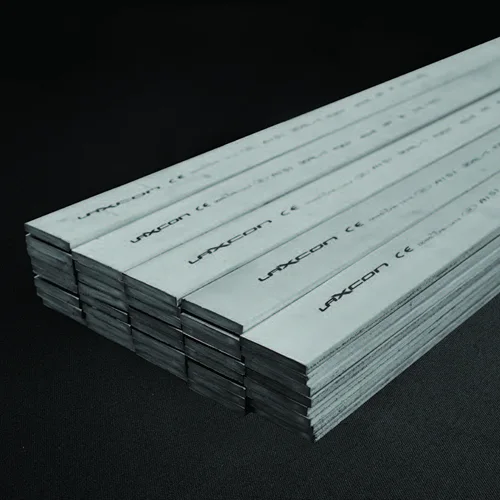
A stainless bar leaves the rolling mill covered in scale. It is then annealed to restore the structure and corrosion resistance that rolling disturbed, as described in the article on heat treatment of steel, and the anneal grows more oxide. Pickling after the anneal removes the scale and the depleted layer together. This is why the standard supply condition for hot rolled stainless flat bar and angle is hot rolled, annealed and pickled, shortened to HRAP. The pickled bar has a uniform matt grey surface, carries the full corrosion resistance of its grade, and can be welded, fabricated or put into service without further descaling.
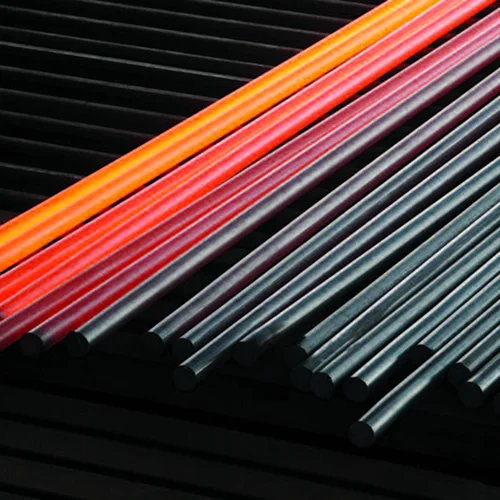
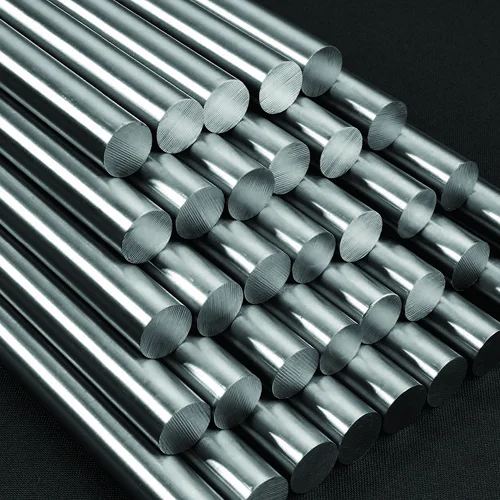
Hot rolled round bar is supplied in three surface conditions: black, with the scale left on, for bar that will be machined all over; annealed and pickled; and peeled, where the skin is cut away. Bright bar starts as annealed and pickled bar and is then drawn, peeled or ground to size, so its finished surface is formed or cut metal rather than a pickled one. The bright bar vs black bar comparison describes the two routes.
Annealed and pickled bar from Laxcon Steels
Laxcon Steels supplies HRAP flat bars and HRAP equal angles in the annealed and pickled condition, and hot rolled round bars black, annealed and pickled, or peeled. Bright bars are drawn, peeled or ground from annealed and pickled bar. The supply condition is named on the mill test certificate.
Frequently asked questions
What is the difference between pickling and passivation?
Pickling dissolves oxide scale, heat tint and the chromium-depleted metal beneath them, usually in nitric and hydrofluoric acid, and removes a thin layer of steel. Passivation removes only free iron and exposed inclusions from a surface that is already clean, in nitric or citric acid, and removes no measurable metal. A welded or heat-treated part is pickled; a machined part is passivated.
Is passivation needed after machining stainless steel?
It is required wherever the drawing or the purchase specification calls for it, and it is standard practice for parts in food, pharmaceutical, medical and aerospace service. Machining leaves iron from the tools and opens sulphide inclusions at the surface. Passivation removes both before the part goes into service.
Is citric acid passivation as effective as nitric acid?
ASTM A967 accepts both, and a part passes or fails on the same tests whichever acid was used. Citric acid is less hazardous and biodegradable. Nitric acid with sodium dichromate remains in use for some martensitic and free-machining grades, where the treatment is chosen by grade.
Does passivation make stainless steel more corrosion resistant?
It restores the full resistance of the grade by removing contamination that would start local attack. It does not raise the grade above its own limit: a passivated 304 part is still liable to pit in conditions that pit 304, and a higher grade is the answer there.
Sources
- ASTM A380/A380M, Standard Practice for Cleaning, Descaling, and Passivation of Stainless Steel Parts, Equipment, and Systems.
- ASTM A967/A967M, Standard Specification for Chemical Passivation Treatments for Stainless Steel Parts.
- SAE AMS 2700, Passivation of Corrosion Resistant Steels.
- EN 2516, Aerospace series: passivation of corrosion resisting steels and decontamination of nickel base alloys.
- EN 10088-1, Stainless steels: list of stainless steels.
- ASM Handbook, Volume 5, Surface Engineering.
- Nickel Institute, Cleaning and descaling stainless steels.