Corrosion of Stainless Steel: Pitting, Crevice, Intergranular Attack and Stress Corrosion Cracking
Send an enquiryCorrosion of stainless steel is the failure of the passive film, a layer of chromium oxide a few nanometres thick that forms on the surface wherever the steel contains at least 10.5 percent chromium and has access to oxygen. While the film is intact the steel corrodes at a negligible rate; where the film is breached and cannot re-form, the steel beneath corrodes as an ordinary iron alloy. Six forms of attack account for nearly every stainless steel failure in service: pitting, crevice corrosion, intergranular corrosion, stress corrosion cracking, galvanic corrosion and uniform corrosion in acids. Each has a distinct cause, and each is answered by a choice of grade, a detail of design or a step in fabrication rather than by stainless steel in general. The pitting resistance equivalent number, PREN, ranks the grades against the first two and is the figure most often used to compare them.
The passive film and how it fails
Chromium in the alloy reacts with oxygen in air or water to form a continuous oxide film that is stable, adherent and self-healing: a scratch through it exposes fresh chromium, which oxidises within seconds and closes the breach. The film needs oxygen to heal, and it is dissolved by chloride ions above all. Every localised form of corrosion below begins where the film has been removed and something prevents it from re-forming: a chloride deposit, a stagnant crevice with no oxygen, a chromium depleted zone beside a grain boundary, or a tensile stress that keeps opening a crack tip.
Pitting corrosion
Pitting is localised attack that produces small, deep holes in an otherwise unaffected surface. It starts where chloride ions break down the film at a point, typically at a sulphide inclusion or a surface defect, and it is self-sustaining once started: the solution inside the pit becomes acidic and chloride rich, the metal at the bottom dissolves, and the pit deepens while the surface around it stays bright. The risk rises with chloride concentration, temperature and acidity, and falls with the chromium, molybdenum and nitrogen content of the grade, which is what PREN expresses. Each grade has a critical pitting temperature, measured to ASTM G48 or ASTM G150 in a standard chloride solution, below which pitting does not initiate. AISI 304 is used in fresh water and inland atmospheres; AISI 316, with 2 to 3 percent molybdenum, in coastal atmospheres and mild brines; the duplex and super duplex grades in seawater and hot chloride process streams.
Crevice corrosion
Crevice corrosion is the same chemistry as pitting, started by geometry instead of by an inclusion. In a narrow gap, under a gasket, a washer, a deposit, a lap joint or a bar resting on a rack, the solution is stagnant and its oxygen is soon used up. The film in the gap cannot heal, chloride migrates in, the solution acidifies, and the metal in the crevice corrodes while the open surface beside it is untouched. Crevice corrosion begins at a lower temperature than pitting in the same grade and solution, so a design that avoids crevices is worth a grade step: welded rather than bolted joints, gaskets that fill their groove, drainage that leaves no standing liquid. Where a crevice is unavoidable, the answer is a grade with a higher PREN.
Intergranular corrosion and sensitisation
Intergranular corrosion attacks the grain boundaries of the steel while the grains themselves are unaffected, and a sensitised part can lose its strength with almost no visible loss of metal. The cause is chromium carbide. When an austenitic stainless steel is held between about 425 and 815 degrees Celsius, in a slow cool after welding, in stress relief or in service, carbon diffuses to the grain boundaries and combines with chromium to form carbides. The metal beside each carbide is depleted of chromium, falls below the 10.5 percent needed for a film, and corrodes preferentially. Three answers exist. The low carbon grades 304L and 316L, with carbon held to 0.03 percent, form too little carbide to matter and are the standard choice for welded fabrication. The stabilised grades 321 and 347 carry titanium or niobium, which combine with the carbon in preference to chromium, and are chosen for long service in the sensitising range. And a sensitised part can be restored by solution annealing at 1,010 to 1,120 degrees Celsius followed by a rapid cool, which dissolves the carbides and keeps them from re-forming. ASTM A262 sets out the tests that detect sensitisation on a sample.
Stress corrosion cracking
Stress corrosion cracking is brittle cracking under the combined action of a tensile stress and a specific corrosive environment, in a material that would resist either alone. For the austenitic stainless steels the environment is chloride solution at a temperature above roughly 60 degrees Celsius; hot chloride water in heat exchangers, insulation that has absorbed chloride and dried against a hot pipe, and evaporated brine on a warm tank wall are the classic cases. The stress may be applied or residual from welding and cold work. The cracks branch and can pass through a wall in weeks with no measurable loss of metal. The austenitic grades are the most susceptible, and a higher PREN does not help: 316 cracks in the same conditions as 304. The resistant families are the duplex grades, whose ferrite content interrupts the crack path, and the ferritic grades, which resist chloride cracking almost entirely. Duplex 2205 is therefore the usual replacement for 304 or 316 in hot chloride service, and stress relief, low residual stress design and the avoidance of chloride concentration at hot surfaces are the fabrication answers.
Galvanic corrosion
Galvanic corrosion occurs when two dissimilar metals are in electrical contact in an electrolyte: the less noble metal corrodes faster and the more noble is protected. Passive stainless steel is noble in the galvanic series, so the damage falls on the carbon steel, aluminium or zinc coupled to it, most severely where a small anode feeds a large stainless cathode. A carbon steel bolt in a stainless plate is the classic failure; a stainless bolt in a carbon steel plate is not. Isolation with a non-conducting washer or sleeve, or matching the metals, is the answer.
Uniform corrosion in acids
Uniform corrosion is general attack over the whole surface at a steady rate, the result of an environment that dissolves the passive film everywhere at once. Reducing acids do this: hydrochloric acid at almost any concentration, dilute sulphuric acid and hot organic acids. The rate is then measured in millimetres a year and a design life calculated from it, as for carbon steel. Molybdenum and copper improve resistance, which is why 316L is specified for mild acid service and why nickel alloys such as Inconel 625 and Monel 400 take over where the stainless steels run out. Oxidising acids, nitric acid above all, strengthen the film, and stainless steel resists them well.
The six forms compared
| Form | Cause | Where it appears | Answer |
|---|---|---|---|
| Pitting | Chloride breaks the film at a point | Small deep holes on a bright surface | Higher PREN grade; clean, inclusion-free surface |
| Crevice | Stagnant, oxygen-starved gap plus chloride | Under gaskets, washers, deposits, lap joints | Design without crevices; higher PREN grade |
| Intergranular | Chromium carbide at grain boundaries after 425 to 815 degrees Celsius | Beside welds, after slow cooling or long hot service | L grades, 321 or 347, solution anneal |
| Stress corrosion cracking | Tensile stress plus hot chloride | Heat exchangers, insulated hot pipe, warm brine tanks | Duplex or ferritic grade; stress relief; keep chloride off hot surfaces |
| Galvanic | Contact with a less noble metal in an electrolyte | The carbon steel, aluminium or zinc partner | Insulate the joint; match the metals |
| Uniform | Reducing acid dissolves the film everywhere | Hydrochloric, dilute sulphuric, hot organic acids | 316L or high alloy grade; nickel alloy beyond it |
PREN and the grade ladder
The pitting resistance equivalent number is calculated from the composition as PREN = Cr + 3.3 Mo + 16 N, with the elements in weight percent. It ranks grades against pitting and crevice corrosion, and only against those two: it says nothing about stress corrosion cracking or acid resistance. At the middle of their composition windows the common grades give about 19 for 304, about 25 for 316, about 35 for duplex 2205 and about 42 for super duplex 2507. A PREN above 40 is the usual definition of a super duplex or super austenitic grade fit for seawater. The PREN reference gives the value for every grade in the register and the composition behind it.
Prevention in fabrication and service
Many corrosion failures of stainless steel trace to fabrication or design rather than to the grade. Iron contamination comes first: grinding discs, wire brushes, clamps and lifting gear that have touched carbon steel leave iron particles in the surface, which rust and start pits beneath them, so tools for stainless steel are kept separate. Heat tint beside a weld, a thick oxide over chromium depleted metal, is removed by pickling or mechanical cleaning. A smooth surface holds fewer deposits and initiation sites than a rough one, which is one reason ground bar outlasts hot rolled bar in the same environment. Pickling to ASTM A380 removes scale, heat tint and embedded iron; passivation to ASTM A967 in nitric or citric acid removes free iron and thickens the film. Design completes the list: no crevices, no stagnant zones, drainage of every low point, no chloride bearing insulation or cleaning agent on a hot surface.
Grades for corrosive service as bar
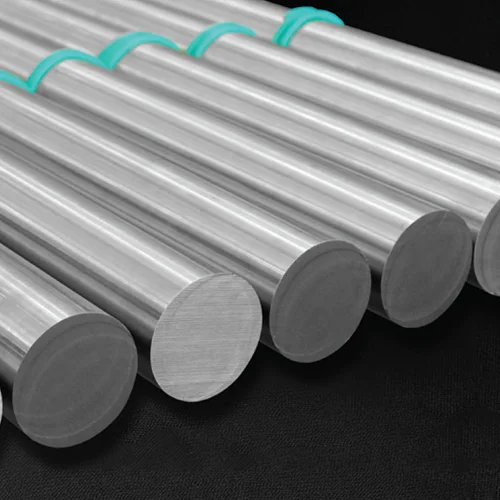
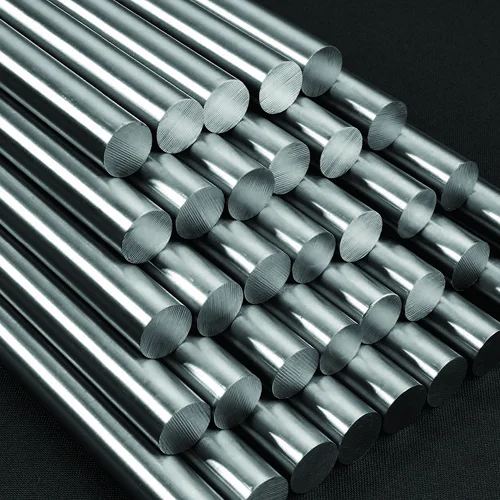
Laxcon Steels melts and rolls the grades in this article as long products: the austenitic grades 304, 304L, 316 and 316L, the stabilised 321 and the duplex grades as hot rolled round bar and bright bar, and duplex steel as a product in its own right for chloride service. The heat analysis on the certificate is the composition the PREN is calculated from, and the annealed and pickled condition of the hot rolled bar is the surface described above. The 304 vs 316 article covers the choice between the two commonest grades.
Frequently asked questions
What is the most common form of corrosion in stainless steel?
Pitting and crevice corrosion caused by chlorides account for most failures in service, followed by stress corrosion cracking in hot chloride environments. The first two are ranked by the chromium, molybdenum and nitrogen content of the grade, expressed as PREN, and are reduced by design that avoids crevices and standing chloride. Stress corrosion cracking is assessed separately: PREN does not predict it, the austenitic grades are susceptible whatever their molybdenum content, and the duplex and ferritic grades are the resistant choice.
What is PREN?
The pitting resistance equivalent number, calculated as chromium plus 3.3 times molybdenum plus 16 times nitrogen in weight percent. It ranks grades against pitting and crevice corrosion: about 19 for 304, 25 for 316, 35 for duplex 2205 and 42 for super duplex 2507.
What is sensitisation?
The formation of chromium carbide at grain boundaries when an austenitic stainless steel is held between about 425 and 815 degrees Celsius, leaving chromium depleted zones that corrode preferentially. Low carbon grades such as 304L and 316L and stabilised grades such as 321 avoid it; solution annealing reverses it.
Does 316 resist stress corrosion cracking better than 304?
No. Both austenitic grades crack in hot chloride solutions above about 60 degrees Celsius under tensile stress; molybdenum improves pitting resistance but not cracking resistance. Duplex grades such as 2205 and the ferritic grades are the resistant choice.
Sources
- ASTM G48, Standard Test Methods for Pitting and Crevice Corrosion Resistance of Stainless Steels and Related Alloys by Use of Ferric Chloride Solution.
- ASTM G150, Standard Test Method for Electrochemical Critical Pitting Temperature Testing of Stainless Steels.
- ASTM A262, Standard Practices for Detecting Susceptibility to Intergranular Attack in Austenitic Stainless Steels.
- ASTM A380 and ASTM A967, cleaning, descaling and passivation of stainless steel parts.
- ASM Handbook, Volume 13B, Corrosion: Materials: the articles on the corrosion of wrought stainless steels.
- Sedriks, A. J., Corrosion of Stainless Steels, second edition, Wiley: pitting, crevice, intergranular and stress corrosion cracking mechanisms.