Steel for Boilers and Pressure Parts Under the Indian Boiler Regulations: Makers, Materials and Inspection
Send an enquiryIBR steel is steel made, tested and certified for the pressure parts of boilers under the Indian Boiler Regulations, the technical code that the Central Boilers Board makes under India's boiler law. The law is the Boilers Act, 2025, in force since 1 May 2025, which repealed the Boilers Act, 1923. The code is the Indian Boiler Regulations, 2026, published in the Gazette of India dated 1 October 2026, which superseded the Indian Boiler Regulations, 1950. A boiler is registered for use only if its materials, design and construction meet the standard conditions of the regulations, or fall within one of the exceptions they allow. For steel, those conditions cover the specification of the material, the process by which it was made, the tests it passed and the certificate that records them. The steel maker's own certificate is accepted in place of an inspecting authority's certificate when the Central Boilers Board has recognised the maker as a well-known steel maker.
The Boilers Act, 2025 and the Indian Boiler Regulations
The Boilers Act, 2025 (Act No. 12 of 2025) received assent on 4 April 2025. Notification S.O. 1943(E) of 30 April 2025 appointed 1 May 2025 as the day it came into force. It applies to all boilers and boiler components except railway locomotive boilers, boilers in steam-propelled vessels, boilers of the Army, Navy and Air Force, and the boilers of sterilisers and disinfectors in hospitals and nursing homes of not more than 100 litres capacity.
The Act defines a boiler as a pressure vessel in which steam is generated for use external to itself by the application of heat, and which is wholly or partly under pressure when the steam is shut off. Three kinds of vessel fall outside the definition: a vessel of less than 25 litres, measured from the feed check valve to the main steam stop valve; a vessel whose design and working gauge pressures are both below 1 kilogram per square centimetre; and a vessel in which water is heated below 100 degrees Celsius. Boiler components are the steam piping, feed piping, economiser, superheater, mountings, fittings and any other part of a boiler subject to a gauge pressure above 1 kilogram per square centimetre.
Section 7 of the Act is the legal root of IBR material. It forbids the manufacture of a boiler or boiler component unless the material, mountings and fittings used in its construction conform to the specifications set by regulations. Section 40 gives the Central Boilers Board the power to make those regulations, among them the specifications for material and the manner of recognising inspecting authorities and competent persons.
Section 45 repealed the 1923 Act. Regulations made under it have effect as if made under the new Act until replaced, and a certificate issued under it and in force on 1 May 2025 continues until the date it shows, unless cancelled. The Indian Boiler Regulations, 1950, made by the Central Boilers Board under the 1923 Act, therefore remained the technical code until the Board replaced them.
The draft regulations were published as notification G.S.R. 31(E) of 14 January 2026. The Board made the final text by a notification dated 7 August 2026, which appeared in the Gazette of India, Extraordinary, dated 1 October 2026. The Indian Boiler Regulations, 2026 came into force on publication. They supersede the 1950 regulations "except as respects things done or omitted to be done before such supersession".
The Central Boilers Board
The Central Boilers Board is the statutory body that regulates the design, manufacture, erection and use of boilers and boiler components in India. Under section 3 of the Act, the Secretary of the administering department of the Government of India chairs it, each State nominates one senior technical officer, and the Central Government nominates an equal number of members for itself, the Bureau of Indian Standards, manufacturers, national laboratories, consultancies and users. The Technical Adviser (Boilers) is the member-secretary. The 2026 regulations were notified under the Department for Promotion of Industry and Internal Trade.
Each State Government appoints a Chief Inspector of Boilers and inspectors to administer the Act in its territory. The owner of a boiler applies to an inspector for registration, and the Chief Inspector registers the boiler and authorises its use at a stated maximum pressure, for not more than twelve months in most cases. Every regulation the Board makes is laid before both Houses of Parliament, which may together modify or annul it.
Recognition of well-known steel makers
The regulations recognise seven kinds of organisation whose work feeds into the certification of a boiler: competent authorities, which certify welders; inspecting authorities; well-known material testing laboratories; well-known steel makers; well-known foundries or forges; well-known tube or pipe makers; and well-known remnant life assessment organisations. Under the 2026 regulations, regulations 17 to 23 set the procedure. Under the 1950 regulations, regulations 4A to 4H set the procedure, a steel maker was recognised under regulation 4C, and the certificate of approval was issued in Form XVI-C.
A steel maker applies to the Secretary of the Central Boilers Board with a questionnaire in Form VI (Part-C). It asks for the steelmaking process, the products and their ranges, the standards to which the steel is made, the testing facilities, whether the steel is made from ore, ore and scrap, or scrap alone, and whether the applicant has produced steel to the regulations for at least two years under a recognised inspecting authority.
An Evaluation Committee then inspects the plant, within sixty days of receiving the fee for a plant in India and ninety days for one abroad. The Technical Adviser (Boilers) chairs it, with the Chief Inspector of Boilers of the State in which the plant stands and one representative of the Board. It examines the maker's quality system, documentation, inspection equipment, control of purchased and nonconforming material, in-process and final inspection, sampling and training, among other areas. On its report, the Secretary of the Board grants or refuses recognition under regulation 19 and issues the certificate of approval in Form VII (Part-C).
Recognition lasts five years from the date of the committee's visit. A renewal application is due at least three months before expiry, and the recognition is treated as extended while it is decided. An appeal lies to the chairperson of the Board.
Recognition changes who certifies the steel. For the plates and bars of a boiler, regulation 8 lists among the documents for registration the steel maker's certificate of manufacture and results of tests in Form V (Part-A) and a certificate from the maker of the plates or bars. Where the steel is made and tested by a well-known steel maker, the proviso to regulation 8 accepts that maker's Form V (Part-A) certificate in place of a certificate from an inspecting authority. Similar provisions let recognised tube and pipe makers certify their own material and mechanical tests, and let recognised foundries and forges certify castings and forgings without an inspecting authority's signature.
Ingots, billets, blooms, rolled bars and rounds
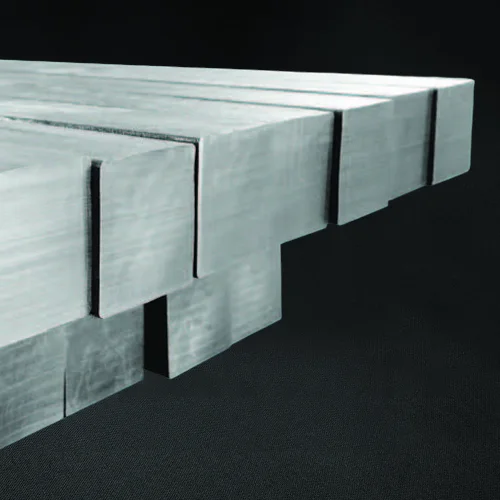
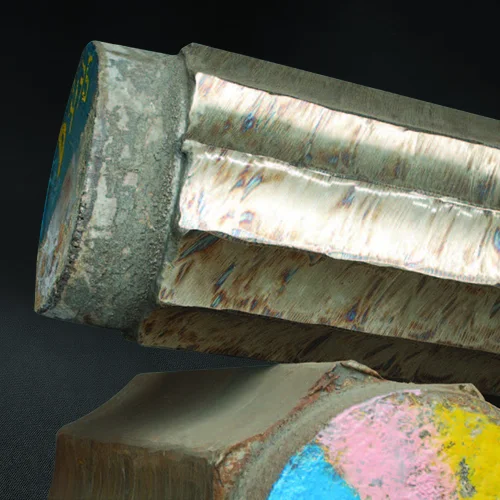
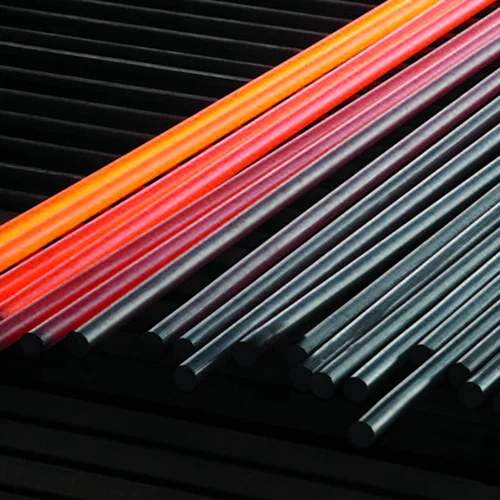
A recognition names the products it covers. Ingots are poured into moulds and are forged or rolled. Billets and blooms, cast continuously or rolled from ingots, are rolled into bars, pierced into seamless tubes and pipes, or forged into flanges and fittings. Rolled bars and rounds are machined into mountings, valve parts, stays and fasteners. The ingot, bloom, billet and slab article sets out how the semi-finished forms differ.
The regulations govern how such steel is made and followed. No structural part of a boiler under pressure may be made of Bessemer process steel or of cast or malleable cast iron. Seamless tubes must be made from fully killed steel produced by the open hearth, electric or an oxygen process, and steel for forgings by the open hearth, electric or basic oxygen process, or by another process giving equivalent properties. Where steel is rolled at a plant other than the one that made it, the certificate must state the steelmaking process, the steel maker and the charge numbers, and the charge number must be marked on each plate or bar.
The maker must make ingots, billets, slabs, plates and bars under a system that traces each finished piece to its original charge, and must mark every plate, section and bar at two places. Tests and inspections take place at the place of manufacture before despatch, but material that proves unsatisfactory while being worked into a boiler is rejected despite any earlier certificate.
Inspecting authorities and competent persons
An inspecting authority is a Chief Inspector of Boilers, or an institution recognised under the regulations, that inspects and certifies boilers and boiler components during manufacture and erection. A competent person is an inspector, or a person recognised under the regulations, who inspects and certifies boilers and components during manufacture, erection and use. Section 8 of the Act requires every manufacturer to engage an inspecting authority before manufacture begins. The inspecting authority inspects at the stages the regulations set, grants a certificate of inspection and stamps the boiler or component when satisfied that its design and drawings conform to the standards the regulations set, and may refuse the certificate only after directing a rectification that is not made. Section 9 requires the owner to engage an inspecting authority again at erection.
For material, the competent person selects every test piece and witnesses its testing, and the maker gives the inspector or competent person every facility to trace plates and bars to their charges and to witness the tests. When a test fails, the competent person's mark on the material is defaced with punch marks in the form of a cross. Where the regulations make no specific provision for a pressure part, the inspecting authority may admit one made to a code such as BS, EN, the ASME Boiler and Pressure Vessel Code or JIS, and its decision binds every registering authority.
IBR materials and their ASME and Indian Standard counterparts
Chapter 2 of the 2026 regulations sets the materials of construction. Regulation 30 covers boiler plates, tubes, pipes, castings, forgings and fittings in carbon, alloy and stainless steel and in nickel alloys. Its material grouping table, Table 2/1, names most grades by their ASME Section II designation, groups grades by M-number for welding and post-weld heat treatment, and gives each a maximum permissible temperature: 427 degrees Celsius for carbon steels such as SA-106 pipe, and 649 degrees Celsius for the chromium-molybdenum steels P11, P22 and P91.
The austenitic stainless steels form group M8. The table lists them mainly as SA-213 tube and SA-182 forgings and fittings, with SA-240 plate in 304, 304L, 316 and 316L and SA-351 castings in CF8, CF8M and CF8C. Types 304, 304H, 316, 316H, 321, 321H, 347, 347H and 310S each carry a maximum permissible temperature of 816 degrees Celsius. The low-carbon grades carry lower limits: 427 degrees Celsius for 304L and 454 degrees Celsius for 316L. Stainless steel plate must be supplied solution annealed to meet the mechanical properties of its grade. The heat-resisting stainless steel article describes why the H grades and the stabilised grades 321 and 347 are chosen for high-temperature service.
The table is not a closed list. Regulation 30 admits material made to another national or international standard in common use for boiler parts, under that standard's own designation, unless the regulations prohibit it; the designer then uses the allowable stresses, composition and mechanical properties of that standard. The notes to the table name Indian Standards, BS, EN, ASME, DIN and JIS, and state that where the regulations and the material specification differ in chemical, mechanical or dimensional requirements, the specification governs. Bar for stays may be supplied to SA-675 or an equivalent. Stainless steel bar for boilers and other pressure vessels is specified in ASTM A479, which ASME adopts as SA-479; the ASTM bar specifications article compares it with A276.
Indian Standards appear in the regulations at particular points. Boiler plate is stamped by the steel maker as IS 2002 provides, with the maker's name, specification, heat number and plate number. Small industrial boilers, a class the regulations limit by pressure and volume, may use fully killed plate to IS 2062 or an equivalent, without the steel maker's Form V (Part-A) certificate if the other certification requirements are met.
IBR recognition at Laxcon Steels
The Central Boilers Board issued Laxcon Steels Certificate 224, recognising the plant as a Well Known Steel Maker under the Indian Boiler Regulations 1950 for boiler quality ingots, billets, blooms, rolled bars and rounds. The certificate is published with the plant's other approvals on the quality page. The melt shop uses electric melting furnaces and an AOD converter, as the technology page describes. The plant's forging quality ingots, continuous cast billets and blooms and hot rolled round bars are described on their product pages.
Frequently asked questions
What is IBR steel?
IBR steel is steel made, tested and certified for boiler pressure parts under the Indian Boiler Regulations. It must meet a specification the regulations accept, be made by a permitted process, be traceable to its charge, and be certified either by a well-known steel maker recognised by the Central Boilers Board or with tests witnessed by a competent person under an inspecting authority.
Are the Indian Boiler Regulations, 1950 still in force?
No. The Indian Boiler Regulations, 2026, made under section 40 of the Boilers Act, 2025 and published in the Gazette of India dated 1 October 2026, superseded them, except as respects things done or omitted to be done before the supersession. Between 1 May 2025 and their replacement, the 1950 regulations continued under the savings clause of the 2025 Act.
What is a well-known steel maker under the Indian Boiler Regulations?
A well-known steel maker is a steel producer recognised by the Central Boilers Board after an Evaluation Committee has inspected its plant and quality system. Its certificate of manufacture and results of tests in Form V (Part-A) is accepted in place of a certificate from an inspecting authority. Recognition lasts five years and is renewable.
Which stainless steel grades are listed in the Indian Boiler Regulations, 2026?
The material grouping table lists types 304, 304H, 304L, 316, 316H, 316L, 321, 321H, 347, 347H and 310S, as ASME SA-213 tube, SA-182 forgings and fittings and, for 304, 304L, 316 and 316L, SA-240 plate, with the cast grades CF8, CF8M and CF8C under SA-351. Material to Indian Standards, BS, EN, ASME, DIN or JIS may also be used under its own designation unless the regulations prohibit it.
Sources
- The Boilers Act, 2025 (Act No. 12 of 2025), Gazette of India, Extraordinary, Part II, Section 1, 4 April 2025: sections 1, 2, 3, 5, 7, 8, 9, 12, 40, 41 and 45.
- Notification S.O. 1943(E), 30 April 2025, Ministry of Commerce and Industry: commencement of the Boilers Act, 2025 on 1 May 2025.
- Indian Boiler Regulations, 2026, Central Boilers Board notification F. No. P-30014/3/2021-Boiler of 7 August 2026, Gazette of India, Extraordinary, Part III, Section 4, No. 596, 1 October 2026: regulations 1 to 3, 8, 17 to 23, 30, 31, 34, 35, 42 to 47, 58 and 548, Table 2/1 and Forms V, VI and VII.
- Indian Boiler Regulations, 1950, regulation 4C and Form XVI-C.
- ASME Boiler and Pressure Vessel Code, Section II, Materials.
- ASTM A479/A479M, Standard Specification for Stainless Steel Bars and Shapes for Use in Boilers and Other Pressure Vessels.
- IS 2002, Steel plates for pressure vessels for intermediate and high temperature service including boilers.
- IS 2062, Hot rolled medium and high tensile structural steel.