18/8 and 18/10 Stainless Steel: What the Numbers Mean and Which Grade They Are
Send an enquiry18/8 stainless steel is a stainless steel containing about 18 percent chromium and 8 percent nickel. That is the composition of AISI 304, the most widely produced stainless steel grade, and of the older grade 302, so 18/8 and 304 describe the same steel. 18/10 stainless steel is the same chromium content with about 10 percent nickel: in most cases it is grade 304 with nickel at the upper end of the window that the grade allows, and in cutlery and cookware the term is also used as a mark of quality without a separate grade behind it. 18/0 stainless steel has 18 percent chromium and no deliberate nickel, and is the ferritic grade 430. The notation comes from the tableware trade; industrial buyers of bar, plate and tube specify the grade number instead.
Where the chromium/nickel notation comes from
The two figures give the nominal chromium and nickel contents in percent by mass, chromium first. The notation was adopted by cutlery and hollowware makers in the first half of the twentieth century, when the austenitic chromium-nickel steels developed at Krupp in 1912 and marketed in Sheffield from the 1920s replaced silver plate and carbon steel on the table. A knife stamped 18/8 told the buyer that it would not rust in the dishwasher or stain from food acids, and the figures were easier to read than a steel works' internal designation. The notation persists on cutlery, cookware, sinks and vacuum flasks, and it appears in consumer searches far more often than the grade number does.
Steel standards do not use it. AISI and ASTM name the steel 304 (UNS S30400), the European standard EN 10088 names it 1.4301 with the code X5CrNi18-10, and the Japanese standard names it SUS304. All of these designate a composition window, not a single pair of figures, which is why one grade can be sold under two chromium/nickel labels.
18/8 is grade 304
ASTM A276 specifies 304 as 18.0 to 20.0 percent chromium and 8.0 to 10.5 percent nickel, with carbon at 0.08 percent maximum, manganese at 2.0 percent maximum, silicon at 1.00 percent maximum, and the balance iron. A heat melted at 18 percent chromium and 8 percent nickel, the lowest cost point in the window, is 18/8 exactly; a heat at 18.2 percent chromium and 8.1 percent nickel is still 18/8 in the trade's rounding. Grade 302, the original 18/8 with carbon up to 0.15 percent, is now rarely made and has been absorbed by 304 in most markets. The 304 composition, its variants 304L and 304H, and its service limits are set out in the 304 stainless steel guide and on the AISI 304 grade page.
18/10: more nickel in the same grade
18/10 describes a steel at 18 percent chromium and 10 percent nickel. The 304 window reaches 10.5 percent nickel, so an 18/10 steel is a 304 melted at the top of its nickel range, and it carries the same grade number, the same standard and the same certificate as an 18/8 heat. Some 18/10 cutlery is made from 316 instead, which has 10 to 14 percent nickel and adds molybdenum; the label then understates the steel. There is no separate standard grade named 18/10, and a buyer who needs the extra nickel or the molybdenum specifies 316 by number rather than relying on the label.
The extra nickel does two things. It stabilises the austenitic structure more fully, so the steel stays non-magnetic after the deep drawing and polishing that a fork or a bowl undergoes, and it adds a small margin of corrosion resistance in the mild acids and salts of food service. It does not change the strength, the hardness or the appearance, and it raises the cost of the steel by the price of two percentage points of nickel. In tableware the term has also become a mark applied to the better product lines, with or without a measured 10 percent, which is why the same manufacturer may sell 18/8 and 18/10 lines made from heats of the same grade.
18/0, 13/0 and the other labels
18/0 is grade 430, a ferritic stainless steel with 16 to 18 percent chromium and no nickel addition. It is magnetic, cheaper than the austenitic grades because it carries no nickel, and adequate for dry storage and short contact with food, but it stains and pits more readily than 304 in the dishwasher and in salty or acidic food. It is used for cutlery handles, economy flatware, and where a magnetic steel is wanted, for example the base of induction cookware. 13/0 is a 13 percent chromium martensitic grade in the 410 and 420 family, hardenable by heat treatment and used for knife blades because it takes and holds an edge, at the cost of lower corrosion resistance. 18/10 with molybdenum is a trade label for 316.
| Notation | Grade | Chromium | Nickel | Structure | Magnetic | Typical use |
|---|---|---|---|---|---|---|
| 18/8 | 304 (1.4301), formerly 302 | 18 to 20 percent | 8 to 10.5 percent | Austenitic | No, in the annealed condition | Cutlery, cookware, sinks, tanks, bar, tube, fasteners |
| 18/10 | 304 at high nickel, or 316 | 18 to 20 percent (16 to 18 for 316) | 10 percent (10 to 14 for 316) | Austenitic | No | Cutlery and cookware sold as a higher line |
| 18/0 | 430 (1.4016) | 16 to 18 percent | None added | Ferritic | Yes | Economy flatware, appliance trim, induction bases |
| 13/0 | 410, 420 (1.4006, 1.4021) | 11.5 to 14 percent | None added | Martensitic | Yes | Knife blades, hardened parts |
| 18/10 with molybdenum | 316 (1.4401) | 16 to 18 percent | 10 to 14 percent | Austenitic | No | Marine, chemical, surgical, heavy-duty cookware |
Is 18/10 better than 18/8?
Marginally, and only in corrosion resistance. Two percentage points of nickel add a small margin against staining in dishwasher detergents and acidic food, and keep the steel fully non-magnetic after cold forming. Strength, hardness, weight, appearance and ease of cleaning are the same, because both are the same grade. In practice the difference between two pieces of tableware labelled 18/8 and 18/10 is more often the thickness of the metal, the quality of the polish and the finishing of the edges than the nickel content. For an industrial part the question does not arise: the buyer specifies 304 or 316 by number with its standard, and the certificate states the nickel that was actually melted.
Food contact and dishwashers
Grades 304 and 316 are the standard food-contact stainless steels, accepted under the food-contact regulations of most jurisdictions because the chromium oxide film that protects them is stable in food acids, salts and cleaning agents and releases negligible metal. Grade 430 is accepted too, with the limitation that prolonged contact with salt or acid can pit it. In a dishwasher the risks to any of the three are chloride-bearing detergents, salt residue, and contact with rusting carbon steel items in the same load, which leave iron particles on the surface that rust and stain the stainless steel. A mark that appears after washing has several possible causes: transferred iron from another item in the load, a deposit of salts left by hard water or detergent, a heat tint or a scratch that has broken the surface, or genuine pitting where chloride has been concentrated by drying. Transferred iron and salt deposits lift with a mild acid cleaner; a mark that returns in the same place after cleaning is more likely to be a pit. The does stainless steel rust article covers the mechanism.
18/8 as bar and long product
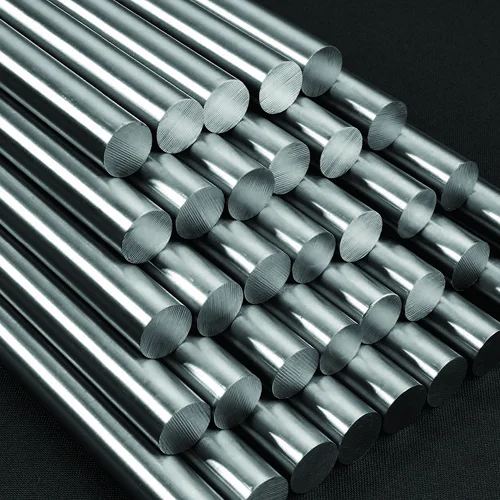
The 18/8 composition that reaches the table as cutlery reaches industry as bar, and the grade number is the same. Laxcon Steels melts grade 304 and its variants and supplies them as hot rolled round bar from 16 to 125 mm and bright bar from 5 to 115 mm, with the chromium and nickel of the heat stated on the mill certificate against the window of the grade ordered. What each alloying element does is set out in the stainless steel composition article, and the choice between 304 and 316 in the 304 versus 316 comparison. The full list of grades with their composition windows is in the grade reference.
Frequently asked questions
Is 18/8 stainless steel the same as 304?
Yes. 18/8 states the nominal chromium and nickel of grade 304 (and of the older grade 302), which ASTM A276 specifies as 18 to 20 percent chromium and 8 to 10.5 percent nickel. The notation is a description of nominal composition and not a certified grade: it names no standard, no carbon limit and no delivery condition, and an article stamped 18/8 has been sold on that mark alone. A buyer who needs the grade establishes it from the order and the mill test certificate.
Is 18/10 stainless steel 316?
Usually not. 18/10 is most often grade 304 with nickel at the top of its window. Some cutlery makers use 316, which has 10 to 14 percent nickel and 2 to 3 percent molybdenum, and label it 18/10; the molybdenum is what distinguishes 316, and it is not in the label. A buyer who needs 316 specifies it by number.
Is 18/10 stainless steel magnetic?
No, in the annealed condition. Both 18/8 and 18/10 are austenitic and are not attracted to a magnet; heavily cold-worked 18/8 can become weakly magnetic, and the extra nickel in 18/10 reduces that effect. 18/0 (grade 430) and 13/0 (grades 410 and 420) are magnetic.
Which is better for cookware, 18/8 or 18/10?
Both are grade 304 and perform the same in cooking, cleaning and service life. 18/10 offers a small margin against staining. The thickness of the base, the bonding of any aluminium or copper core, and the finish matter more to a pan than the difference between 8 and 10 percent nickel.
Sources
- ASTM A276/A276M, Standard Specification for Stainless Steel Bars and Shapes (composition of 304, 316, 410, 420 and 430).
- EN 10088-1, Stainless steels, list of stainless steels (1.4301, 1.4401, 1.4016, 1.4006, 1.4021).
- ISO 8442-2, Materials and articles in contact with foodstuffs, cutlery and table holloware, requirements for stainless steel and silver-plated cutlery.
- Council of Europe Resolution CM/Res(2013)9 on metals and alloys used in food contact materials, and the ISSDA and worldstainless guidance on food-contact grades.